Saṅkṣepa (concise narration)
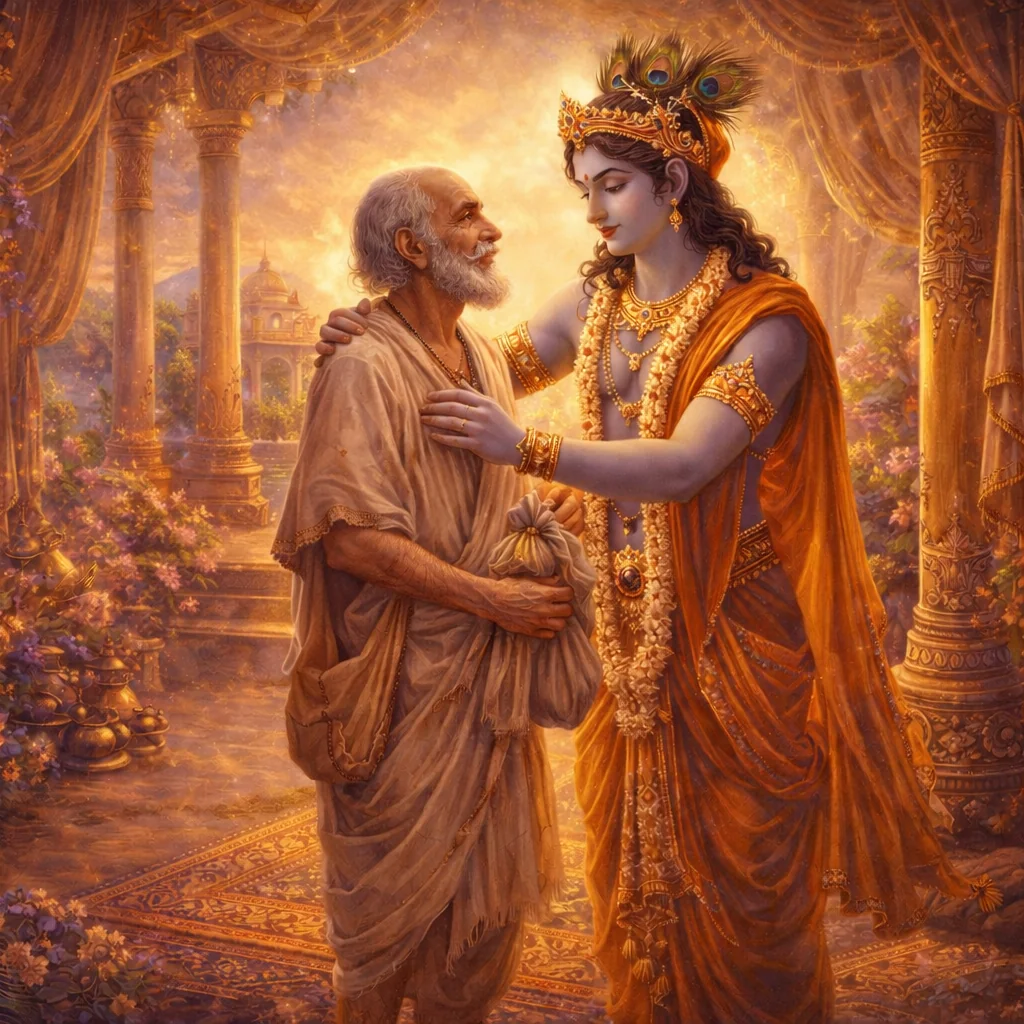
Sudāmā, a poor brāhmaṇa and sincere devotee, comes to Dvārakā to meet his childhood friend, Śrī Kṛṣṇa. Though Sudāmā is weak from hardship and carries only a simple offering, Kṛṣṇa receives him with extraordinary honor—embracing him, seating him close, and serving him with affection. The Supreme Lord shows that pure devotion, not external wealth, is the true ornament of a person.
द्वारवत्यां समागम्य ददर्श परमेश्वरम् ॥"
Sudāmā, a cowherd boy and dear friend of Kṛṣṇa, arrived in Dvārakā and met the Supreme Lord.
Śāstra‑pramāṇa (scriptural proof)
SB 10.80 — Sudāmā's arrival; Kṛṣṇa's loving reception
कृष्णस्य प्रियसख्यकः ।
द्वारवत्यां समागम्य
ददर्श परमेश्वरम् ॥ sudāmā nāma gopālaḥ
kṛṣṇasya priya-sakhyakaḥ
dvāravatyāṁ samāgamya
dadarśa parameśvaram
The Lord honors His devotee, showing that bhakti outweighs all external status.
SB 10.81 — The offering accepted; mercy revealed
प्रहृष्टवदनोऽभवत् ।
स्वागतेनाभिनन्द्याथ
सुखासनेऽधितिष्ठति ॥ taṁ prāpya bhagavān kṛṣṇaḥ
prahṛṣṭa-vadano 'bhavat
svāgatenābhinandyātha
sukhāsane 'dhitiṣṭhati
Kṛṣṇa accepts a simple gift with great joy and bestows His blessings without being requested.
Tattva (what this lila teaches)
Bhakti is the real wealth: The Lord values sincerity and devotion above grandeur or possessions. Sudāmā's poverty was external; internally, he was rich in love for Kṛṣṇa.
Kṛṣṇa is bhakta-vatsala: He is especially affectionate to His devotees and delights in serving them. Kṛṣṇa personally attended to Sudāmā, washing his feet and offering him respect.
Offering, not bargaining: The devotee offers with humility, and the Lord reciprocates freely—mercy is not "earned," it is received through love. Sudāmā didn't ask for anything; Kṛṣṇa gave everything.
Sevā today (simple practice)
अहं त्वा सर्वपापेभ्यो मोक्षयिष्यामि मा शुचः ॥"
Abandon all varieties of religion and just surrender unto Me. I shall deliver you from all sinful reactions. Do not fear.
How to use this darśanam page
This page provides a complete śāstra‑mārga contemplation on the Sudāmā‑Kṛṣṇa līlā. Use it for daily meditation: View the image → read the narration → study the śāstra pramāṇa → contemplate the tattva → perform the seva. The structure is fixed to maintain śāstric integrity while allowing deep personal reflection.