Pramāṇa (Śāstra reference)
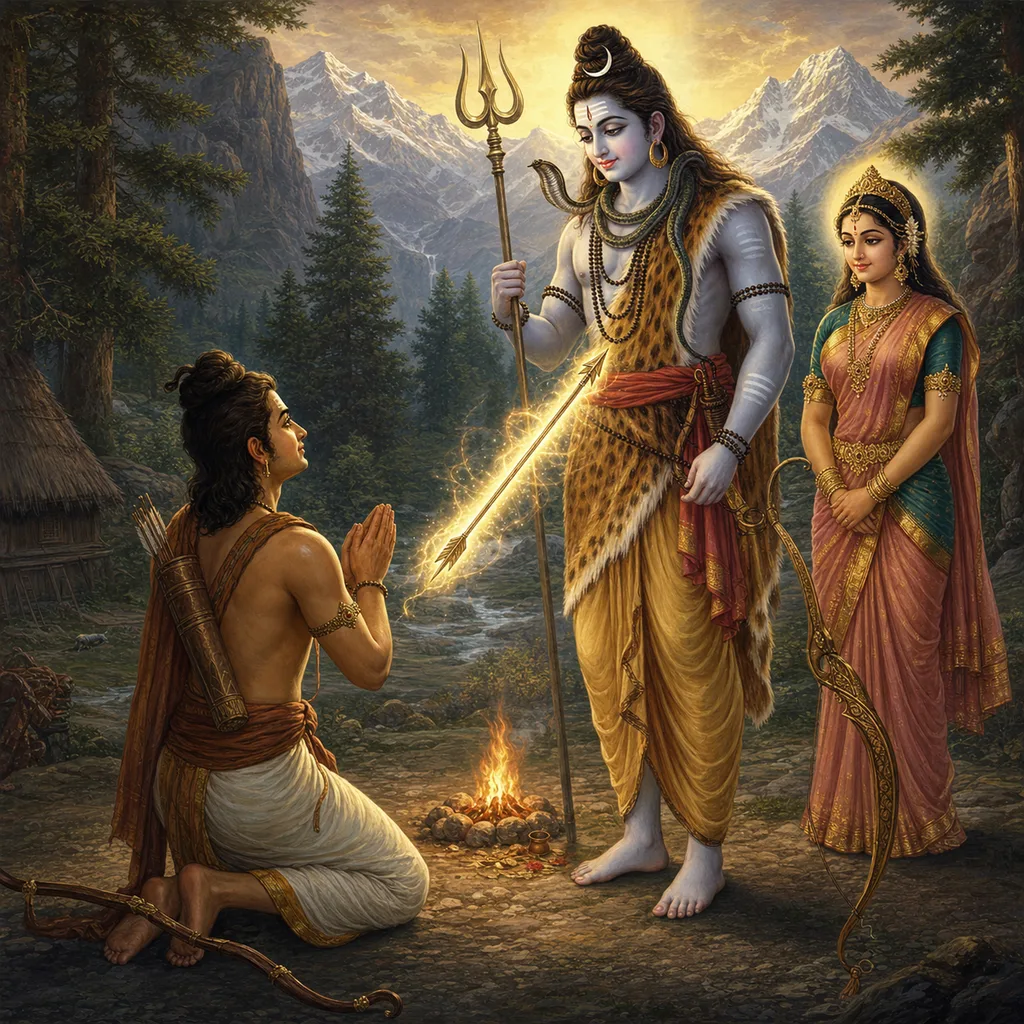
Mahabharata, Vana-parva describes how, during the exile of the Pandavas, Arjuna performs severe austerities in the Himalayas to obtain celestial weapons. Lord Shiva appears before him in the form of a kirata hunter, tests Arjuna in combat, reveals His divine form, and grants him the Pāśupatāstra.
Saṅkṣepa (short meaning)
This lila reveals how divine strength is received through tapasya, humility, and the blessings of great personalities. Arjuna does not seek power for selfish conquest, but to serve Krishna’s plan and protect dharma in the coming war. Lord Shiva first tests his steadiness, courage, and warrior spirit, then reveals Himself and gives the Pāśupatāstra. The scene teaches that even heroic ability must be purified by surrender; weapons, skill, and influence become auspicious only when used under dharma and the Lord’s higher arrangement.
Śāstra-pramāṇa (key points from the text)
Arjuna performs austerity
(Mahabharata, Vana-parva — Arjuna receives the Pāśupatāstra)
The kirata appears
(Mahabharata, Vana-parva — Arjuna receives the Pāśupatāstra)
The boar is struck
(Mahabharata, Vana-parva — Arjuna receives the Pāśupatāstra)
Arjuna is tested
(Mahabharata, Vana-parva — Arjuna receives the Pāśupatāstra)
Shiva reveals Himself
(Mahabharata, Vana-parva — Arjuna receives the Pāśupatāstra)
The weapon is granted
(Mahabharata, Vana-parva — Arjuna receives the Pāśupatāstra)
Tattva (essential teaching) — with śāstra
Power belongs to dharma
Shiva is honored
Tests purify strength
Strength needs humility
Sevā today (practice for this day)
How to use this darśanam page
View the image, read the narration and śāstra-pramāṇa, contemplate the tattva, and complete the practice through seva. Follow the sequence: darśana → śravaṇa → manana → seva.