Pramāṇa (Śāstra reference)
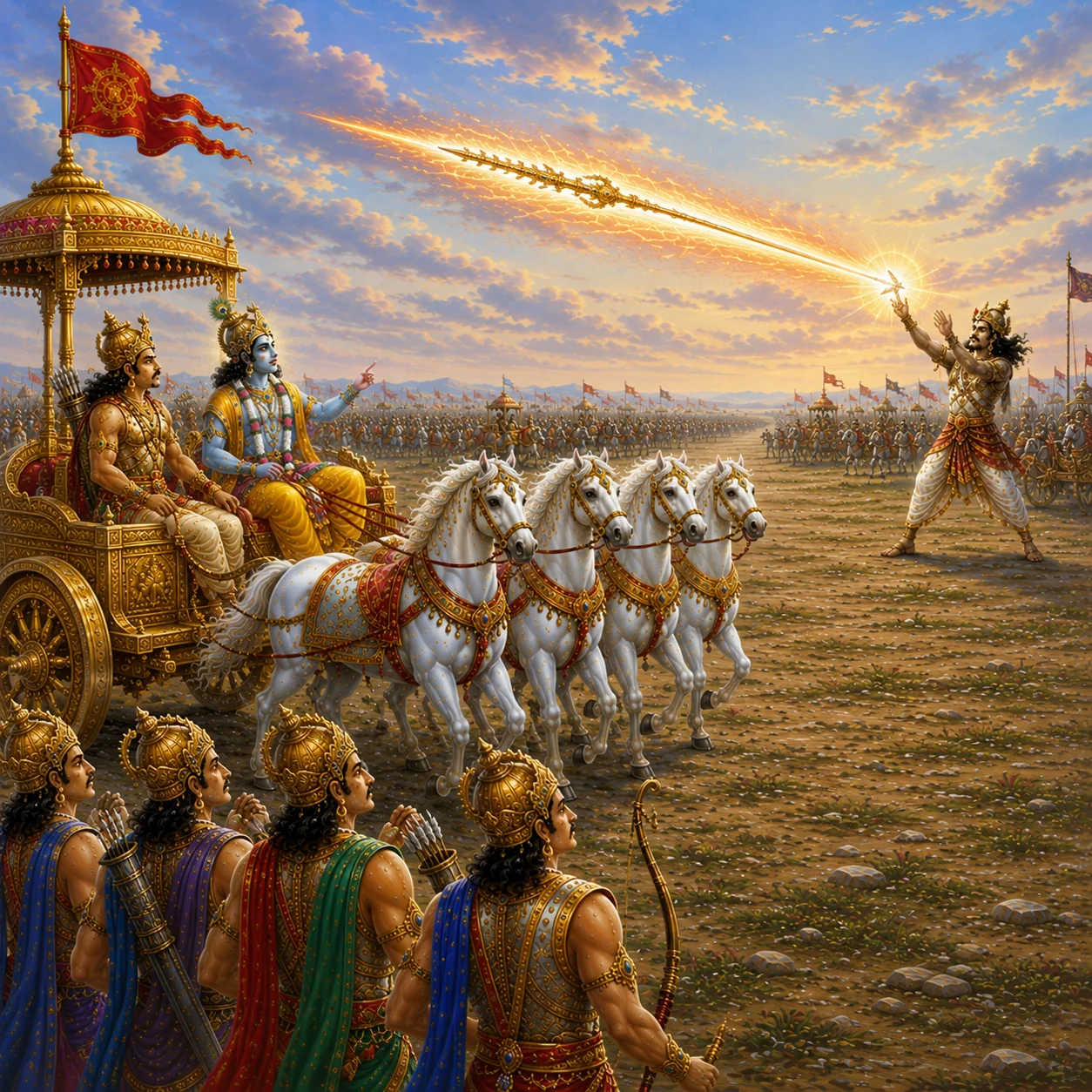
Śrīmad-Bhāgavatam, Canto 1, Chapter 7, verses 19–27 — seeing no other protection, Ashvatthama releases the brahmastra. Arjuna sees the terrible danger, turns to Sri Krishna, and, by Krishna’s instruction, releases his own weapon and then withdraws both to prevent devastation.
Saṅkṣepa (short meaning)
This lila reveals both the danger of uncontrolled power and the saving guidance of the Lord. Ashvatthama, driven by fear and anger, uses a weapon he does not know how to withdraw. Arjuna does not act independently; he takes shelter of Krishna, who sees the danger clearly and instructs him how to respond. The lila teaches that true protection comes not from force alone, but from obedience to the Lord and from disciplined action under divine guidance.
Śāstra-pramāṇa (key points from the text)
Ashvatthama resorts to the brahmastra
(Śrīmad-Bhāgavatam, Canto 1, Chapter 7, verses 19–27)
The weapon blazes in all directions
(Śrīmad-Bhāgavatam, Canto 1, Chapter 7, verses 19–27)
Arjuna turns immediately to Krishna
(Śrīmad-Bhāgavatam, Canto 1, Chapter 7, verses 19–27)
Krishna explains the danger
(Śrīmad-Bhāgavatam, Canto 1, Chapter 7, verses 19–27)
Arjuna protects all beings
(Śrīmad-Bhāgavatam, Canto 1, Chapter 7, verses 19–27)
Tattva (essential teaching) — with śāstra
Power requires purity and control
The devotee takes shelter of the Lord
Krishna’s guidance protects the world
True heroism serves dharma
Sevā today (practice for this day)
How to use this darśanam page
View the image, read the narration and śāstra-pramāṇa, contemplate the tattva, and complete the practice through seva. Follow the sequence: darśana → śravaṇa → manana → seva.