Pramāṇa (Śāstra reference)
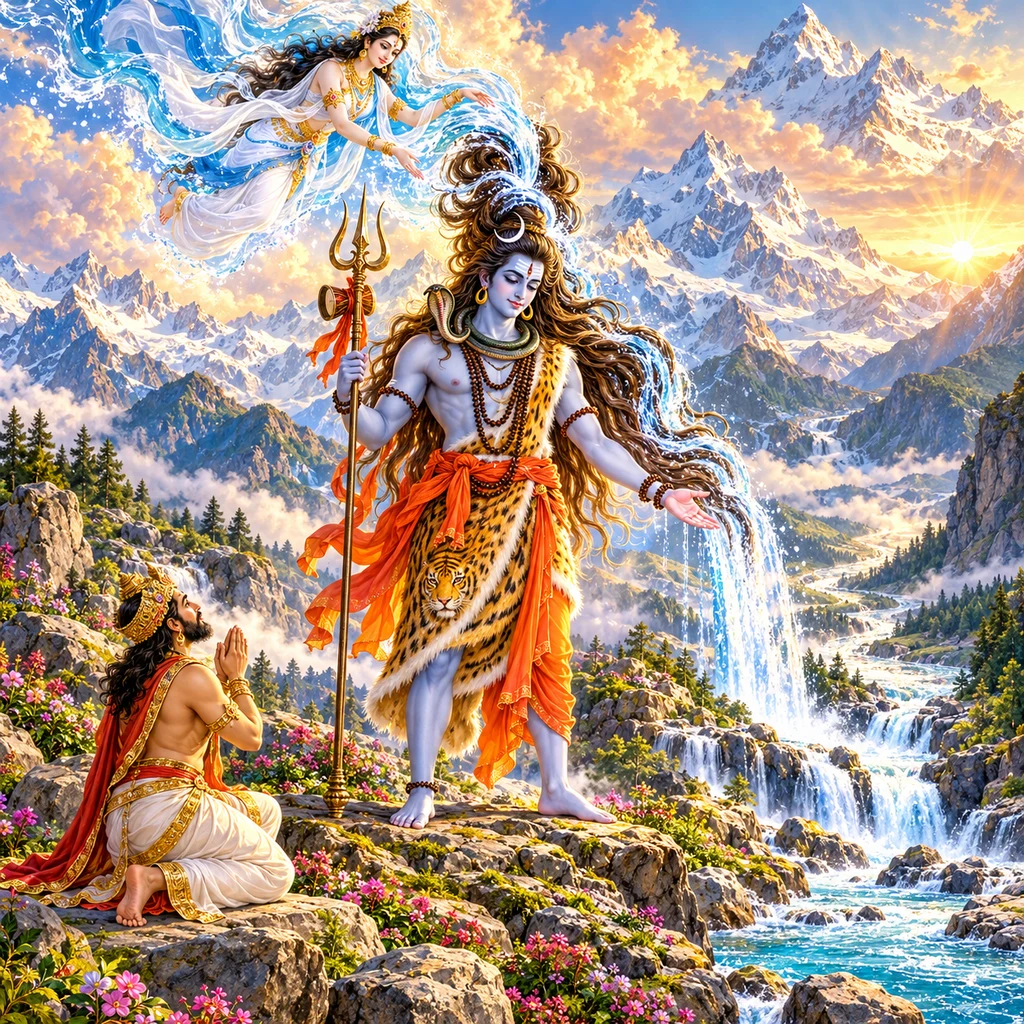
ŚB 9.9.2 states that King Bhagīratha performed severe austerities to bring the Ganges to this material world. Pleased with him, mother Ganges appeared and offered a benediction (9.9.3), but warned that Earth could not sustain the force of her descent (9.9.4). Bhagīratha explained that Lord Śiva could sustain her forceful waves (9.9.7) and quickly satisfied him through further austerity (9.9.8). Lord Śiva agreed and attentively sustained the Ganges on his head (9.9.9). The sacred river then followed Bhagīratha and touched the ashes of Sagara’s sons, bringing their elevation (9.9.10–13). Bhagīratha, Gaṅgādevī, Lord Śiva and the reception of the current on his head come directly from the text. Śiva’s matted locks, the Himalayan landscape, dawn light, garments, ornaments, trident and exact arrangement of the figures are artistic presentation.
Saṅkṣepa (short meaning)
King Bhagīratha satisfies mother Ganges and Lord Śiva through severe austerities. So that the mighty celestial current will not break through Earth, Śiva receives the Ganges on his head. The sacred river then follows Bhagīratha and delivers the sons of Sagara.
Śāstra-pramāṇa (key events from the text)
Bhagīratha performs severe austerities
(Śrīmad-Bhāgavatam 9.9.2)
Mother Ganges appears before the king
(Śrīmad-Bhāgavatam 9.9.3)
The Ganges warns of the current’s force
(Śrīmad-Bhāgavatam 9.9.4)
Bhagīratha approaches Lord Śiva
(Śrīmad-Bhāgavatam 9.9.7)
Lord Śiva is quickly satisfied
(Śrīmad-Bhāgavatam 9.9.8)
Śiva receives the Ganges
(Śrīmad-Bhāgavatam 9.9.9)
Tattva (essential teachings) — with śāstra
Perseverance in service overcomes the impossible
A pure devotee purifies even a holy place
Lord Śiva serves the Lord’s purpose
Divine mercy follows sincere service
Contact with the Ganges brings great benefit
Sevā today (practice for this day)
How to use this darśanam page
View the image, read the narration and śāstra-pramāṇa, contemplate the tattva, and complete the meditation through service. Follow the sequence: darśana → śravaṇa → manana → seva.