Pramāṇa (Śāstra reference)
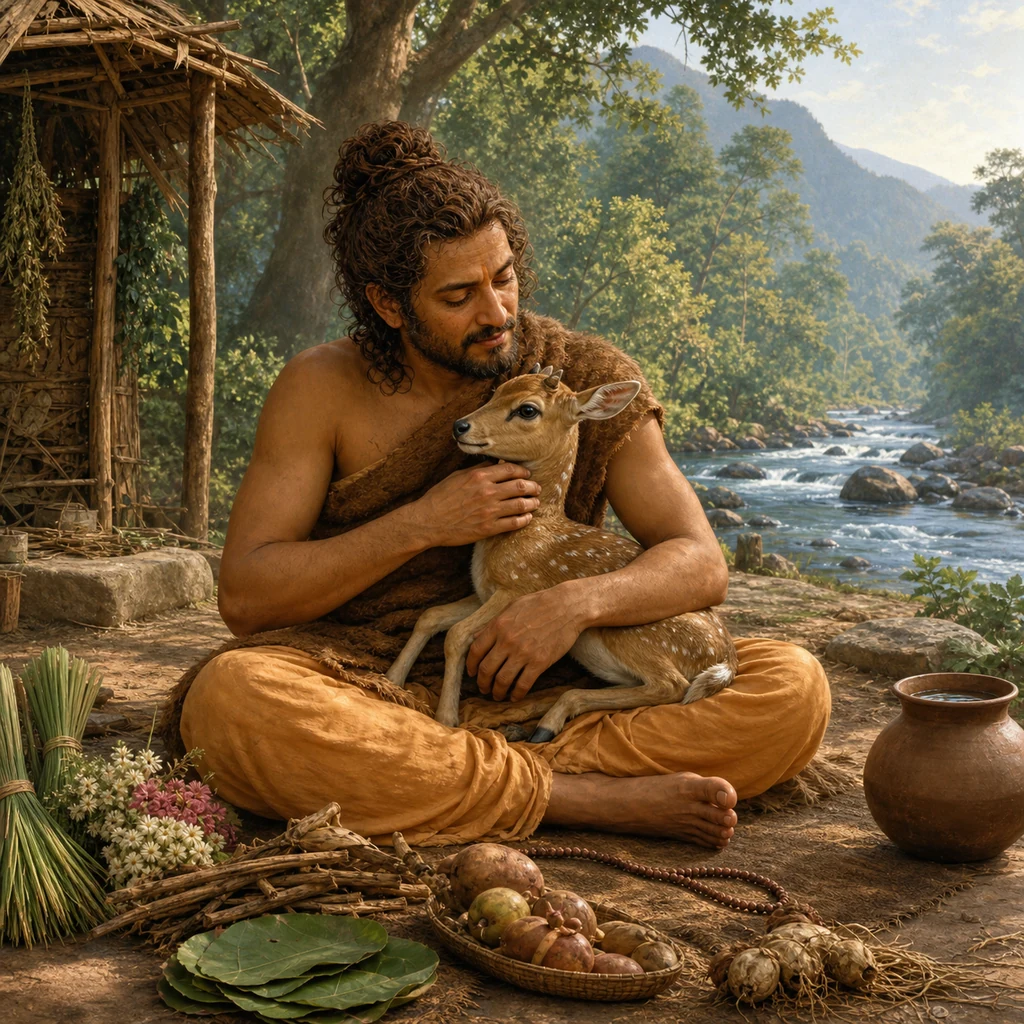
Śrīmad-Bhāgavatam 5.7.8–11 tells how Bharata Mahārāja divided his kingdom among his sons and left royal life for Pulaha-āśrama, where he lived alone near the sacred Cakra-nadī, or Gaṇḍakī, and worshiped the Lord with flowers, tulasī, water, roots and fruits. Verse 5.7.13 describes him dressed in deerskin, with tawny, curling, matted hair wet from bathing three times daily. One day he saw a helpless, motherless deer calf being carried by the river. Out of compassion the saintly King lifted it from the waves and brought it to his āśrama (5.8.7). He fed, protected, petted and cared for the calf, but this affection gradually displaced his spiritual disciplines and worship (5.8.8–11). When gathering kuśa grass, flowers, firewood, leaves, fruits, roots and water, he took the calf into the forest for fear that wild animals might harm it (5.8.12). He carried it on his shoulders and lovingly kept it on his lap or chest (5.8.13). Absorbed in maintaining the deer, Bharata neglected his own spiritual purpose; at death his mind remained fixed on the deer and he received a deer body, while retaining remembrance of his former life by the strength of his previous devotional realization (5.8.26–27).
Saṅkṣepa (short meaning)
Bharata Mahārāja’s rescue of a helpless animal began with sincere compassion. Yet when care for the calf displaced remembrance and worship of the Lord, compassion became binding attachment. The episode does not condemn kindness; it teaches that service must remain connected with spiritual purpose and steady sādhana.
Śāstra-pramāṇa (key points from the text)
Bharata leaves his kingdom
(Śrīmad-Bhāgavatam 5.7.8–13; 5.8.7–27)
He rescues the motherless calf
(Śrīmad-Bhāgavatam 5.7.8–13; 5.8.7–27)
Compassion becomes constant care
(Śrīmad-Bhāgavatam 5.7.8–13; 5.8.7–27)
Attachment displaces sādhana
(Śrīmad-Bhāgavatam 5.7.8–13; 5.8.7–27)
The mind at death shapes the next birth
(Śrīmad-Bhāgavatam 5.7.8–13; 5.8.7–27)
Tattva (essential teaching) — with śāstra
Compassion needs spiritual direction
Advancement does not remove the need for vigilance
Attachment is known by what it displaces
Devotional progress is never wasted
Sevā today (practice for this day)
How to use this darśanam page
View the image, read the narration and śāstra-pramāṇa, contemplate the tattva, and complete the practice through seva. Follow the sequence: darśana → śravaṇa → manana → seva.