Pramāṇa (Śāstra reference)
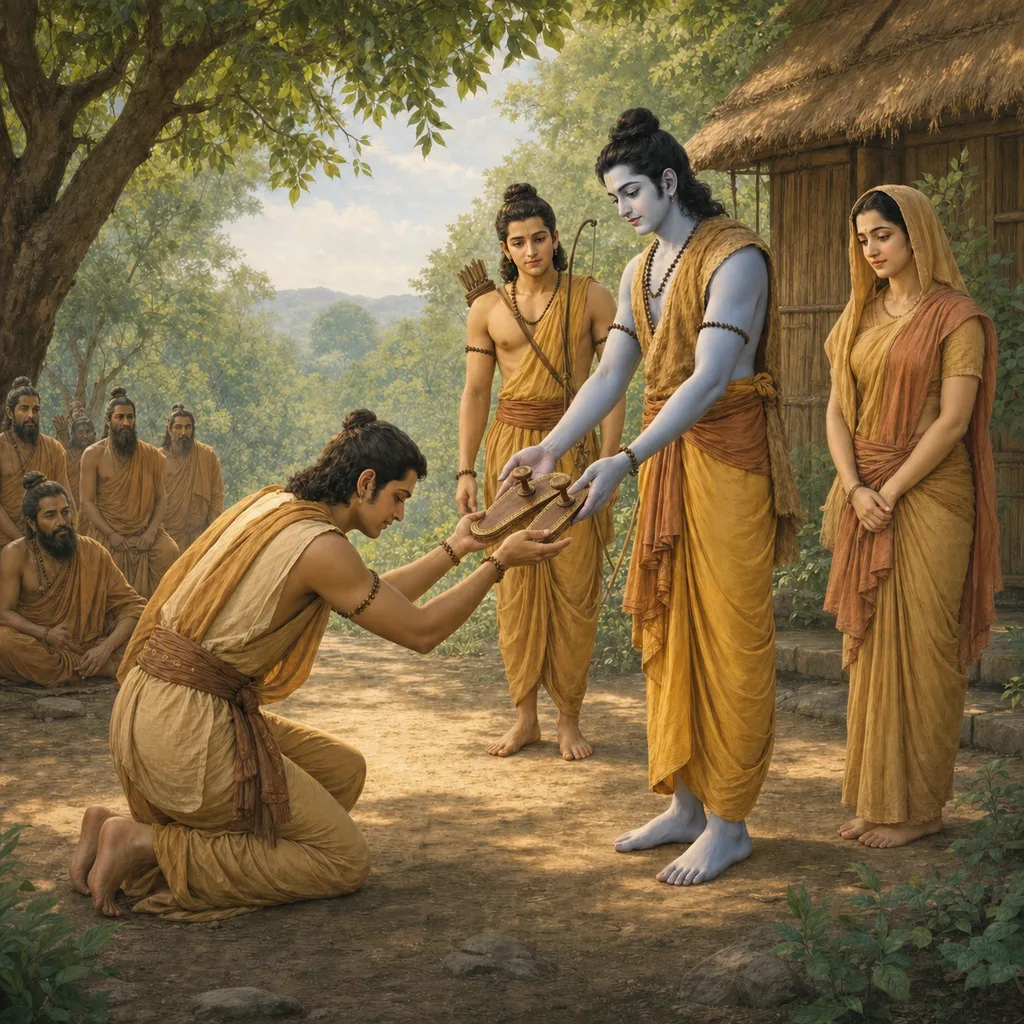
In Vālmīki Rāmāyaṇa, Ayodhyā-kāṇḍa 112, Bharata repeatedly implores Lord Rāma to return and accept the kingdom. Rāma remains firm in fulfilling Daśaratha’s word and assures Bharata that he is capable of protecting the people with the counsel of wise ministers. Bharata then asks Rāma to place His feet upon a pair of gold-adorned sandals, saying that they will secure the welfare of the world (2.112.21). Rāma puts on the sandals, removes them and gives them to the noble Bharata (2.112.22). Bharata bows before the sandals and vows to live austerely outside the city, placing the responsibility of government upon them while awaiting Rāma’s return (2.112.23–25). The episode joins fidelity to a father’s promise, a ruler’s duty and Bharata’s selfless devotion to his elder brother.
Saṅkṣepa (short meaning)
Bharata does not take the sandals as a substitute for personal authority. He receives them as the visible sign that sovereignty belongs to Rāma. Rāma keeps the vow of exile; Bharata accepts the burden of service without claiming the throne for himself. Their different duties meet in one loyalty to dharma.
Śāstra-pramāṇa (key points from the text)
Bharata asks Rāma to return
(Vālmīki Rāmāyaṇa 2.112.21–22)
Rāma remains faithful to Daśaratha’s word
(Vālmīki Rāmāyaṇa 2.112.21–22)
Bharata asks for the padukas
(Vālmīki Rāmāyaṇa 2.112.21–22)
Rāma entrusts them to Bharata
(Vālmīki Rāmāyaṇa 2.112.21–22)
Bharata accepts service, not kingship
(Vālmīki Rāmāyaṇa 2.112.21–22)
Tattva (essential teaching) — with śāstra
Dharma may assign different services
Authority belongs to the Lord
Love honors a promise
Humility can carry great responsibility
Sevā today (practice for this day)
How to use this darśanam page
View the image, read the narration and śāstra-pramāṇa, contemplate the tattva, and complete the practice through seva. Follow the sequence: darśana → śravaṇa → manana → seva.