Pramāṇa (Śāstra reference)
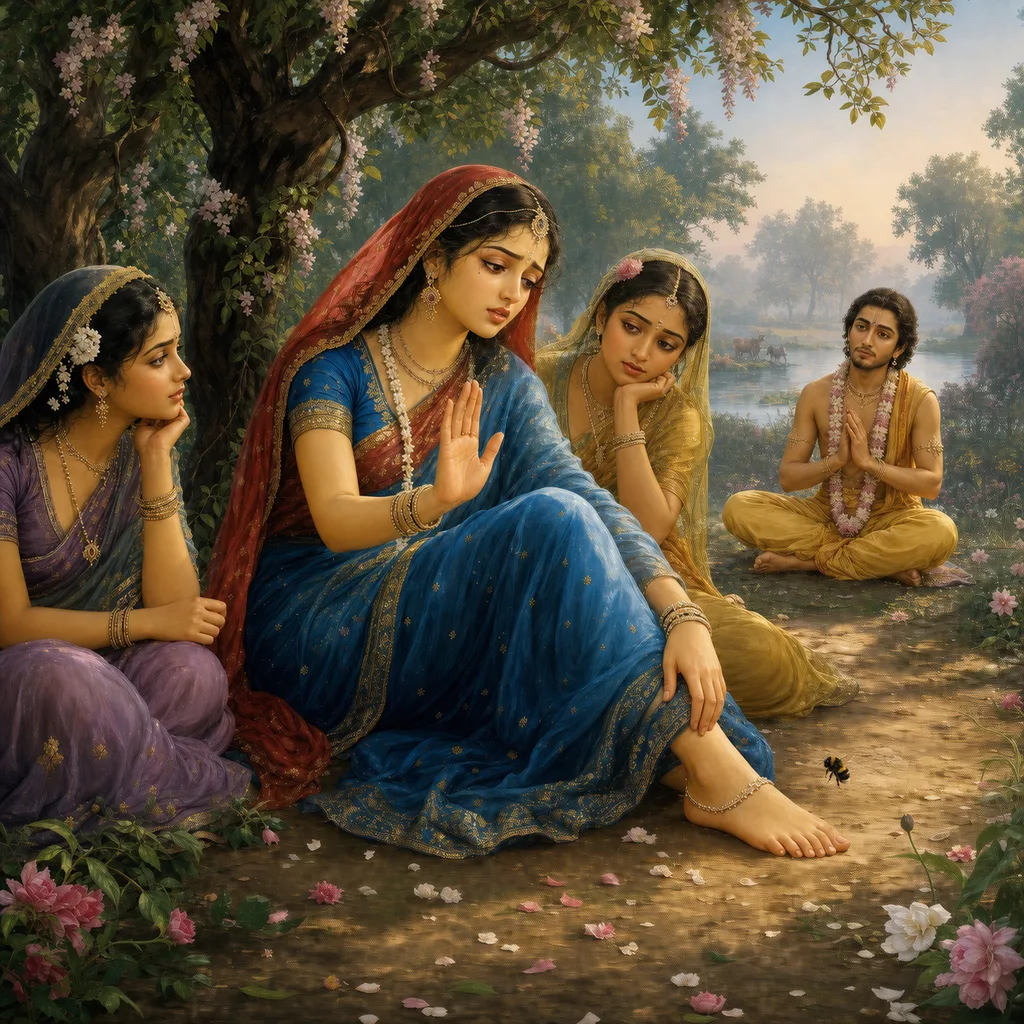
Śrīmad-Bhāgavatam 10.47.9–21 describes the gopīs setting aside their work when Krishna’s messenger Uddhava arrived. Remembering Krishna’s childhood and youth, they sang and wept openly. Verse 11 tells how one gopī, absorbed in meditation on Her former association with Krishna, saw a bumblebee and imagined it to be a messenger from Her beloved. The ācāryas identify this gopī as Śrīmatī Rādhārāṇī. In verses 12–21 She addresses the bee through many changing expressions of love in separation: reproach, irony, grief, remembrance, tenderness and renewed hope. Although Her words appear to reject Krishna, She cannot stop speaking about Him. Uddhava witnesses in Vraja a depth of devotion that later moves him to glorify the gopīs and desire the dust of their feet.
Saṅkṣepa (short meaning)
Bhramara-gītā is not ordinary resentment. Every turn of Śrīmatī Rādhārāṇī’s speech reveals that even complaint cannot move Her consciousness away from Krishna. The bee appears, disappears and returns; Her words change, yet Krishna remains their only center. Love in separation does not erase remembrance—it intensifies remembrance until every sound and movement becomes connected with the Beloved.
Śāstra-pramāṇa (key points from the text)
Uddhava arrives with Krishna’s message
(Śrīmad-Bhāgavatam 10.47.9–21)
A bumblebee approaches
(Śrīmad-Bhāgavatam 10.47.9–21)
She warns it away
(Śrīmad-Bhāgavatam 10.47.9–21)
Reproach cannot end remembrance
(Śrīmad-Bhāgavatam 10.47.9–21)
The bee disappears and returns
(Śrīmad-Bhāgavatam 10.47.9–21)
Uddhava witnesses mahā-bhāva
(Śrīmad-Bhāgavatam 10.47.9–21)
Tattva (essential teaching) — with śāstra
Separation intensifies remembrance
Transcendental speech has many currents
Krishna remains the sole center
Uddhava becomes the student
Sevā today (practice for this day)
How to use this darśanam page
View the image, read the narration and śāstra-pramāṇa, contemplate the tattva, and complete the practice through seva. Follow the sequence: darśana → śravaṇa → manana → seva.