Pramāṇa (Śāstra reference)
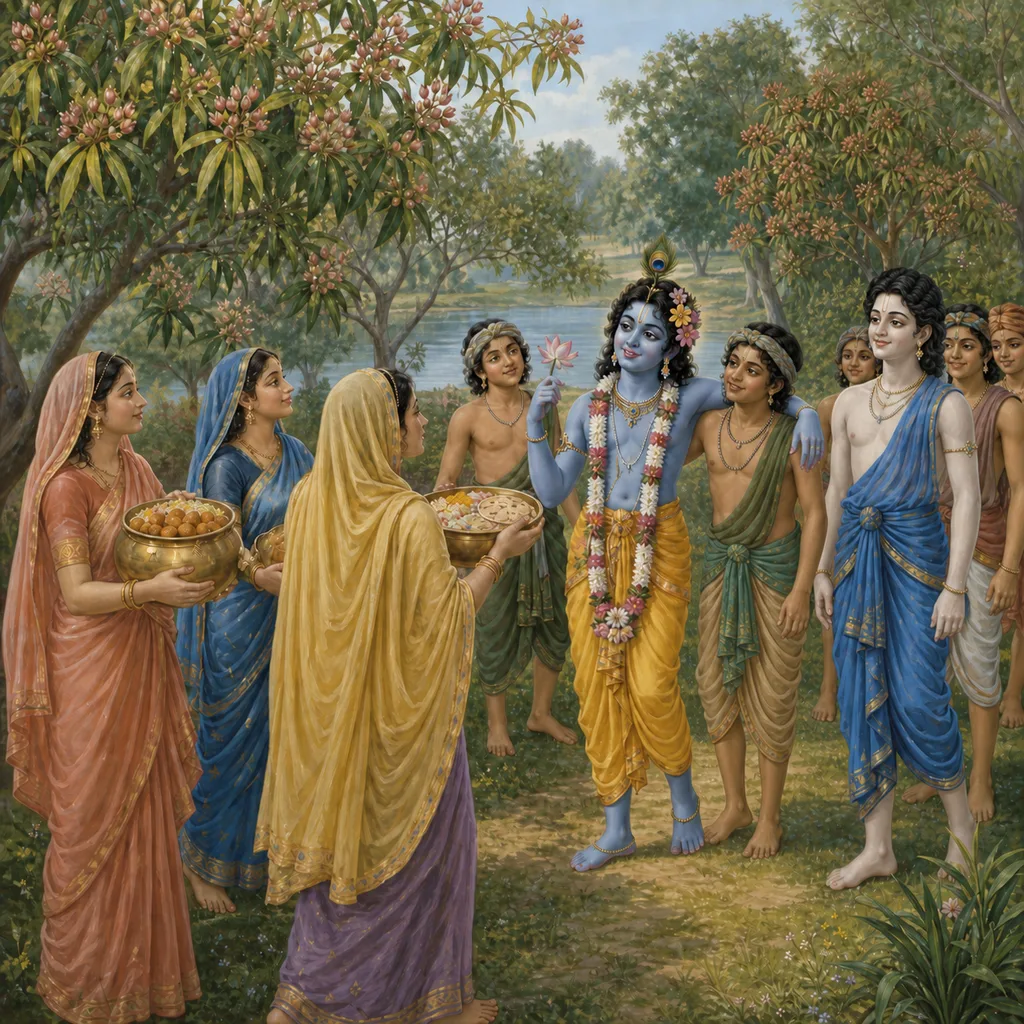
Śrīmad-Bhāgavatam 10.23 tells how hungry cowherd boys, sent by Kṛṣṇa and Balarāma, respectfully asked brāhmaṇas performing an Āṅgirasa sacrifice for food. Absorbed in ritual and material aims, the brāhmaṇas did not answer them (10.23.9–12). Kṛṣṇa then sent the boys to the brāhmaṇas’ wives, whose minds were fixed on Him. As soon as the women heard that Kṛṣṇa was nearby, they became eager. Verse 19 says they took large vessels filled with four varieties of fine, aromatic food and hurried to meet Him. In a garden of budding aśoka trees beside the Yamunā, they saw Kṛṣṇa with Balarāma and the cowherd boys (10.23.20–22). Kṛṣṇa welcomed them, accepted their devotion and later fed His companions from the food they had brought (10.23.24–36). Seeing their wives’ pure devotion, the brāhmaṇas repented of their neglect (10.23.38–39).
Saṅkṣepa (short meaning)
The contrast is not between learning and devotion, but between knowledge closed around pride and knowledge fulfilled in loving service. The brāhmaṇas possessed ritual qualification yet missed the Lord’s request; their wives had heard about Kṛṣṇa, remembered Him and responded immediately. Their vessels carried food, while their eagerness revealed the offering of their hearts.
Śāstra-pramāṇa (key points from the text)
The cowherd boys ask respectfully
(Śrīmad-Bhāgavatam 10.23.9–39)
The brāhmaṇas give no answer
(Śrīmad-Bhāgavatam 10.23.9–39)
Kṛṣṇa sends the boys to the wives
(Śrīmad-Bhāgavatam 10.23.9–39)
The women hurry with vessels
(Śrīmad-Bhāgavatam 10.23.9–39)
They behold Kṛṣṇa by the Yamunā
(Śrīmad-Bhāgavatam 10.23.9–39)
The brāhmaṇas repent
(Śrīmad-Bhāgavatam 10.23.9–39)
Tattva (essential teaching) — with śāstra
Bhakti gives knowledge its purpose
Hearing awakens remembrance
Kṛṣṇa accepts loving intention
A sincere response can awaken others
Sevā today (practice for this day)
How to use this darśanam page
View the image, read the narration and śāstra-pramāṇa, contemplate the tattva, and complete the practice through seva. Follow the sequence: darśana → śravaṇa → manana → seva.