Pramāṇa (Śāstra reference)
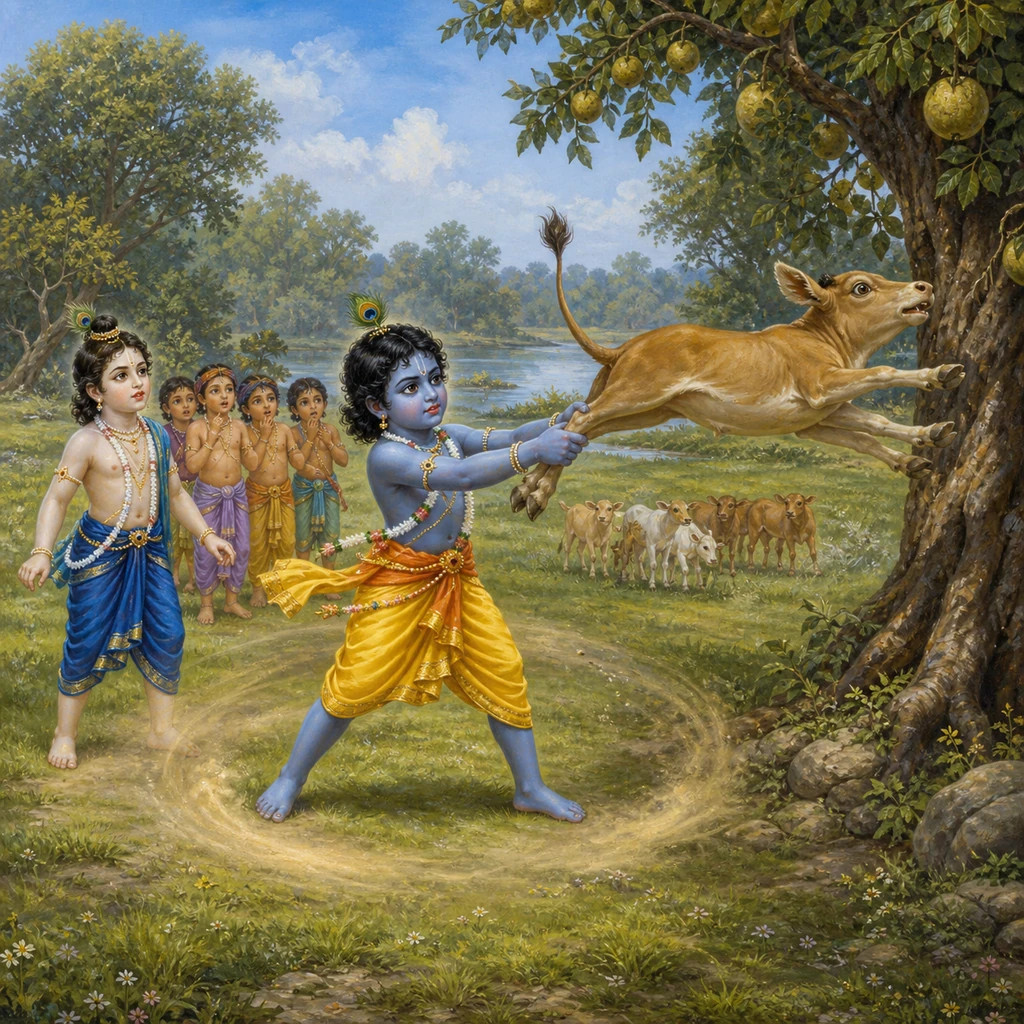
Srimad-Bhagavatam, Canto 10, Chapter 15 describes how the cowherd boys, smelling the sweet tala fruits of Talavana, ask Krishna and Balarama to obtain them. The forest is guarded by the powerful donkey demon Dhenukasura and his associates, and people are afraid to enter. Lord Balarama enters the forest, shakes the tala trees with His arms, and when Dhenukasura attacks Him, Balarama seizes the demon by the hind legs, whirls him around, and throws him into the palm trees. Krishna and Balarama then destroy the other donkey demons, and Talavana becomes safe.
Saṅkṣepa (short meaning)
This lila reveals the protective strength of Lord Balarama, the original spiritual master. The sweet fruits of Talavana are present, but fear and demonic possessiveness keep everyone away from them. Dhenukasura represents stubborn ignorance, dullness, violence, and the tendency to hoard what should be offered in Krishna’s service. Balarama removes that obstacle with effortless divine strength. When the demon falls, the forest becomes open, the fruits can be enjoyed, and the atmosphere is restored to peace. The lila teaches that spiritual strength received from Balarama and guru clears the path to the sweetness of devotional life.
Śāstra-pramāṇa (key points from the text)
The cowherd boys desire the fruits
(Śrīmad-Bhāgavatam, Canto 10, Chapter 15)
Talavana is feared
(Śrīmad-Bhāgavatam, Canto 10, Chapter 15)
Balarama enters the forest
(Śrīmad-Bhāgavatam, Canto 10, Chapter 15)
Dhenukasura attacks
(Śrīmad-Bhāgavatam, Canto 10, Chapter 15)
Balarama slays the demon
(Śrīmad-Bhāgavatam, Canto 10, Chapter 15)
The associates are defeated
(Śrīmad-Bhāgavatam, Canto 10, Chapter 15)
The forest becomes safe
(Śrīmad-Bhāgavatam, Canto 10, Chapter 15)
Tattva (essential teaching) — with śāstra
Balarama is spiritual strength
Guru removes obstruction
Dullness cannot guard devotion
Sweetness follows surrender
Sevā today (practice for this day)
How to use this darśanam page
View the image, read the narration and śāstra-pramāṇa, contemplate the tattva, and complete the practice through seva. Follow the sequence: darśana → śravaṇa → manana → seva.