Pramāṇa (Śāstra reference)
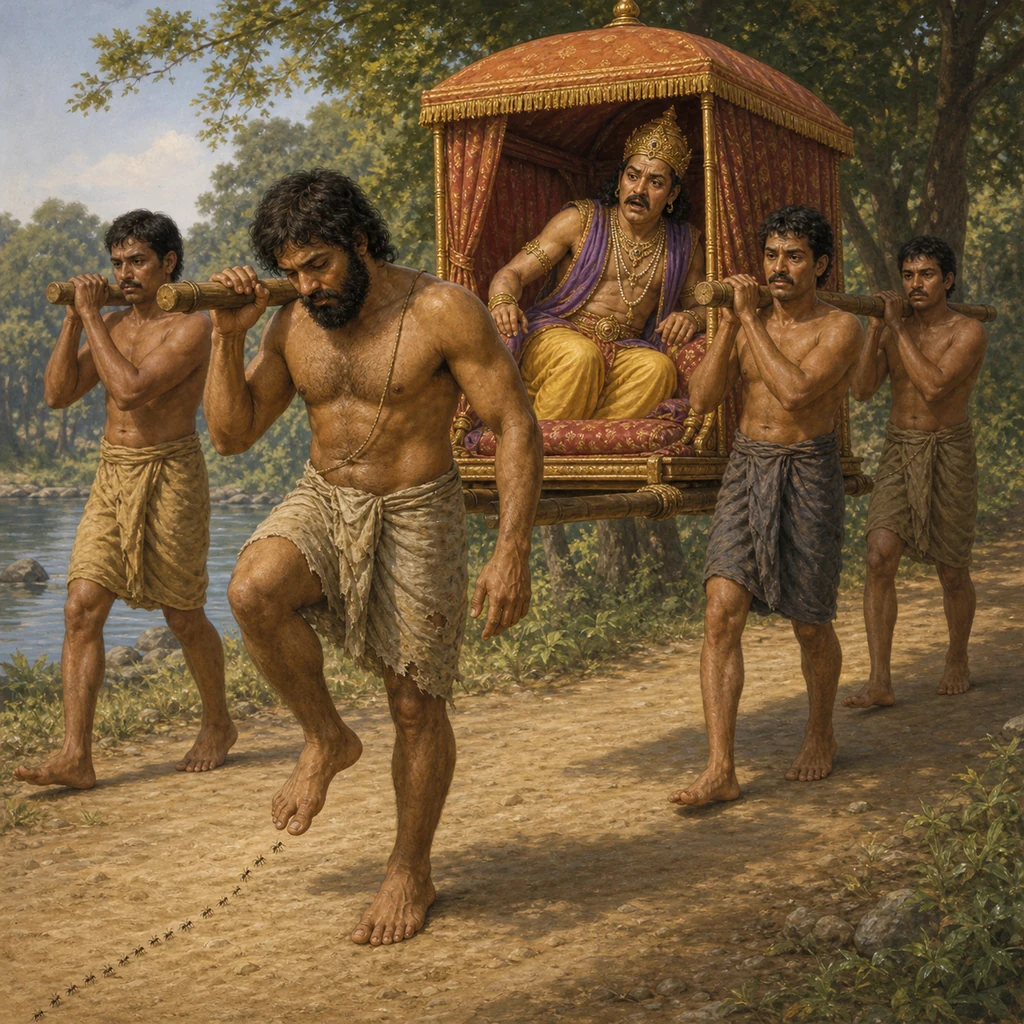
Śrīmad-Bhāgavatam 5.9.3 explains that Bharata Mahārāja remembered his previous births by the Lord’s mercy. Fearing another fall through worldly association, he appeared to ordinary people to be mad, dull, blind and deaf, while inwardly remembering the Lord’s lotus feet and chanting His glories. Verses 5.9.9–10 describe Jaḍa Bharata as indifferent to bodily comfort and insult. His body was young, powerful and muscular, but dusty from lying on the ground and neglecting bathing; he wore only a dirty loincloth and a sacred thread darkened by dirt. When King Rahūgaṇa was travelling toward Kapilāśrama, his chief carriers needed another man. They saw Jaḍa Bharata’s strong body and forced him to become the fourth carrier of the royal palanquin (5.10.1). Yet Jaḍa Bharata looked about three feet ahead before placing each foot so that he would not tread on ants. Because his steps did not match the other carriers, the palanquin moved unevenly and the King complained (5.10.2–7). Jaḍa Bharata then spoke spiritual truth without pride, distinguishing the self from the temporary body and material designations (5.10.8–14). Hearing words that loosened the knot in his heart, Rahūgaṇa quickly descended, bowed at the brāhmaṇa’s feet and asked forgiveness (5.10.15).
Saṅkṣepa (short meaning)
Jaḍa Bharata concealed his spiritual realization beneath an outwardly neglected appearance, but his character appeared in one small act: even while forced to carry a king’s palanquin, he would not carelessly harm an ant. His compassion was not sentiment separated from wisdom; it arose from seeing every living being as spiritually significant.
Śāstra-pramāṇa (key points from the text)
Bharata remembers his previous lives
(Śrīmad-Bhāgavatam 5.9.3, 5.9.9–10; 5.10.1–15)
He lives as Jaḍa Bharata
(Śrīmad-Bhāgavatam 5.9.3, 5.9.9–10; 5.10.1–15)
He is forced to carry the palanquin
(Śrīmad-Bhāgavatam 5.9.3, 5.9.9–10; 5.10.1–15)
He protects the ants
(Śrīmad-Bhāgavatam 5.9.3, 5.9.9–10; 5.10.1–15)
The King’s pride gives way to inquiry
(Śrīmad-Bhāgavatam 5.9.3, 5.9.9–10; 5.10.1–15)
Tattva (essential teaching) — with śāstra
A Vaiṣṇava is a friend to all beings
Spiritual realization may be hidden
The self is distinct from the body
Humility opens the way to knowledge
Sevā today (practice for this day)
How to use this darśanam page
View the image, read the narration and śāstra-pramāṇa, contemplate the tattva, and complete the practice through seva. Follow the sequence: darśana → śravaṇa → manana → seva.