Pramāṇa (Śāstra reference)
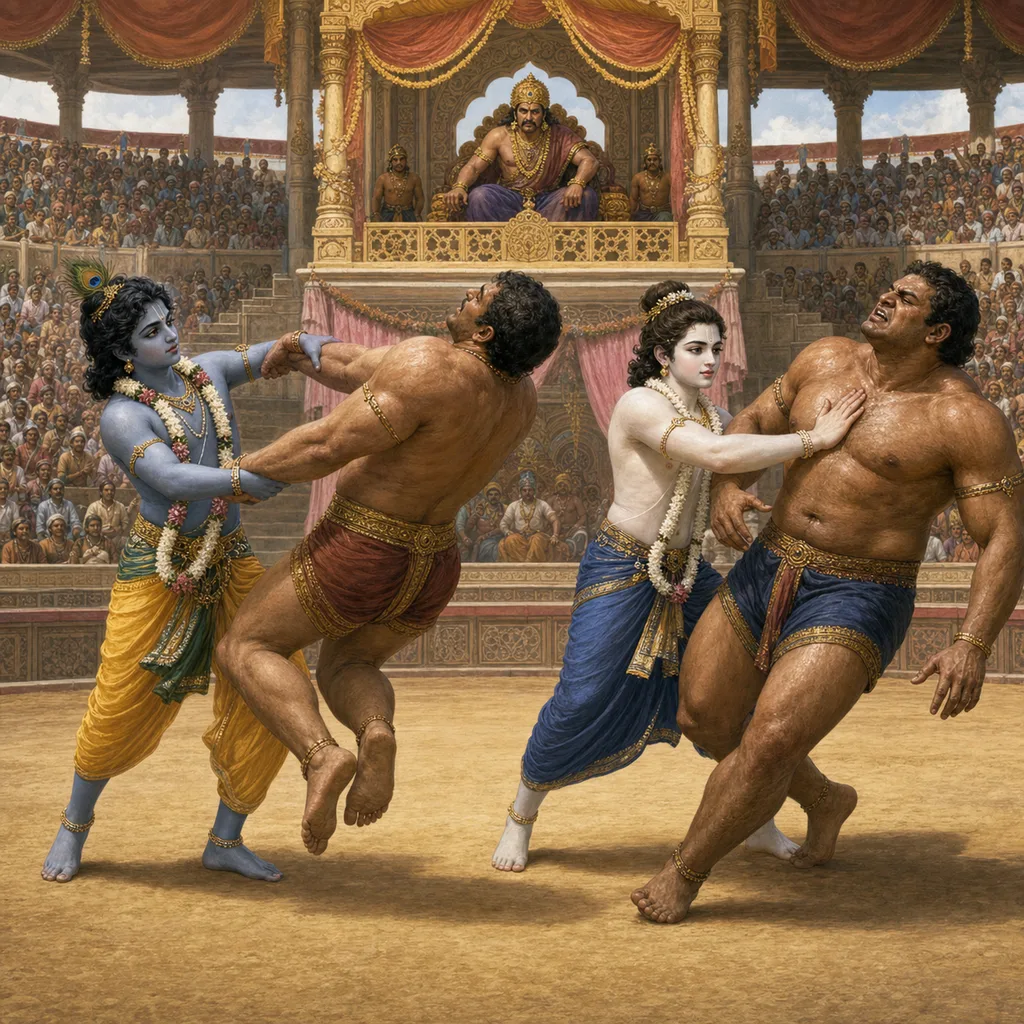
Śrīmad-Bhāgavatam 10.44.1–30 describes how Krishna accepted Chanura’s challenge while Balarama faced Mushtika. They grappled hand to hand, leg to leg, head to head and chest to chest. The women in the arena condemned the unequal match between the massive wrestlers and the youthful brothers and declared that one should not remain silent where injustice is taking place. Krishna then seized Chanura by the arms, whirled him several times and hurled him to the ground. When Mushtika struck Balarama, the Lord answered with a powerful blow of His palm, and the wrestler fell. After the other challengers were defeated or fled, everyone except Kamsa rejoiced, and Krishna and Balarama danced with Their cowherd friends.
Saṅkṣepa (short meaning)
Kamsa uses a public festival to disguise violence as sport, but the spectators recognize the mismatch and speak against it. Krishna and Balarama do not need the assembly’s injustice to be hidden before They can overcome it. Their victory reveals both the weakness of tyranny and the duty of truthful witnesses: dharma is not served by silent approval when wrongdoing is plainly visible.
Śāstra-pramāṇa (key points from the text)
The opponents are paired
(Śrīmad-Bhāgavatam 10.44.1–30)
The contest is visibly unequal
(Śrīmad-Bhāgavatam 10.44.1–30)
Silence is not neutral
(Śrīmad-Bhāgavatam 10.44.1–30)
Krishna overcomes Chanura
(Śrīmad-Bhāgavatam 10.44.1–30)
Balarama answers Mushtika
(Śrīmad-Bhāgavatam 10.44.1–30)
Fear gives way to joy
(Śrīmad-Bhāgavatam 10.44.1–30)
Tattva (essential teaching) — with śāstra
Dharma requires truthful witness
Bhagavan is never overmatched
Tyranny corrupts public order
The Lord restores joy
Sevā today (practice for this day)
How to use this darśanam page
View the image, read the narration and śāstra-pramāṇa, contemplate the tattva, and complete the practice through seva. Follow the sequence: darśana → śravaṇa → manana → seva.