Pramāṇa (Śāstra reference)
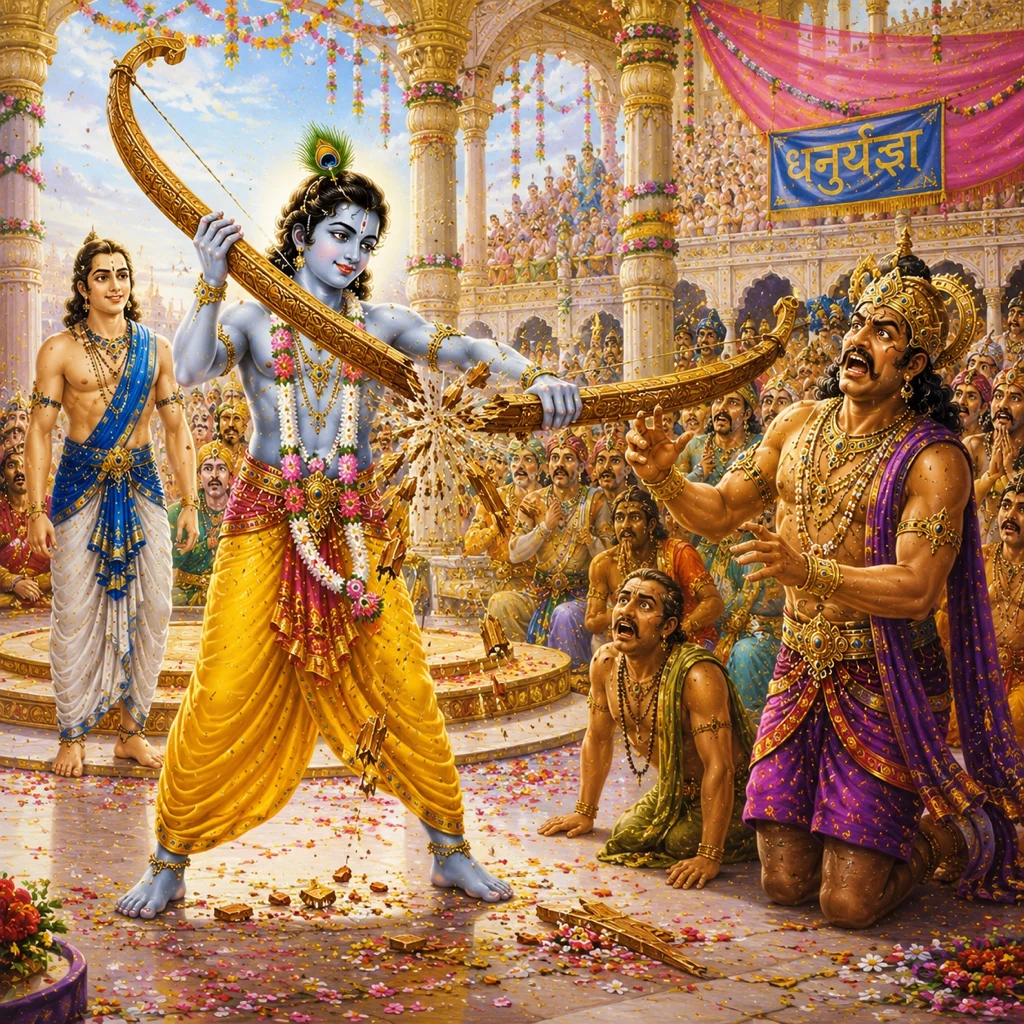
Śrīmad-Bhāgavatam, Canto 10, Chapter 43 — after entering Mathura, Lord Krishna goes to the place where the great sacrificial bow is kept. Though guarded and feared by all, He lifts it effortlessly, strings it, and breaks it in the middle like an elephant breaking a stalk of sugarcane.
Saṅkṣepa (short meaning)
This lila reveals the effortless supremacy of Lord Krishna. The great bow, preserved for Kamsa’s ceremony and protected by powerful guards, represents the pride, fear, and false security of demonic rule. Krishna does not struggle against it. With natural ease He lifts it, bends it, and breaks it. The sound of the bow resounds through earth and sky, announcing that the tyranny of Kamsa is nearing its end. The lila teaches that what appears invincible to the world is nothing before the will of Bhagavan.
Śāstra-pramāṇa (key points from the text)
Krishna and Balarama enter Mathura
(Śrīmad-Bhāgavatam, Canto 10, Chapter 43)
The bow is guarded
(Śrīmad-Bhāgavatam, Canto 10, Chapter 43)
Krishna lifts and strings it
(Śrīmad-Bhāgavatam, Canto 10, Chapter 43)
The bow breaks
(Śrīmad-Bhāgavatam, Canto 10, Chapter 43)
The guards are subdued
(Śrīmad-Bhāgavatam, Canto 10, Chapter 43)
Tattva (essential teaching) — with śāstra
Krishna’s power is effortless
Material domination collapses
Fear cannot preserve false power
Adharma cannot stand forever
Sevā today (practice for this day)
How to use this darśanam page
View the image, read the narration and śāstra-pramāṇa, contemplate the tattva, and complete the practice through seva. Follow the sequence: darśana → śravaṇa → manana → seva.