Pramāṇa (Śāstra reference)
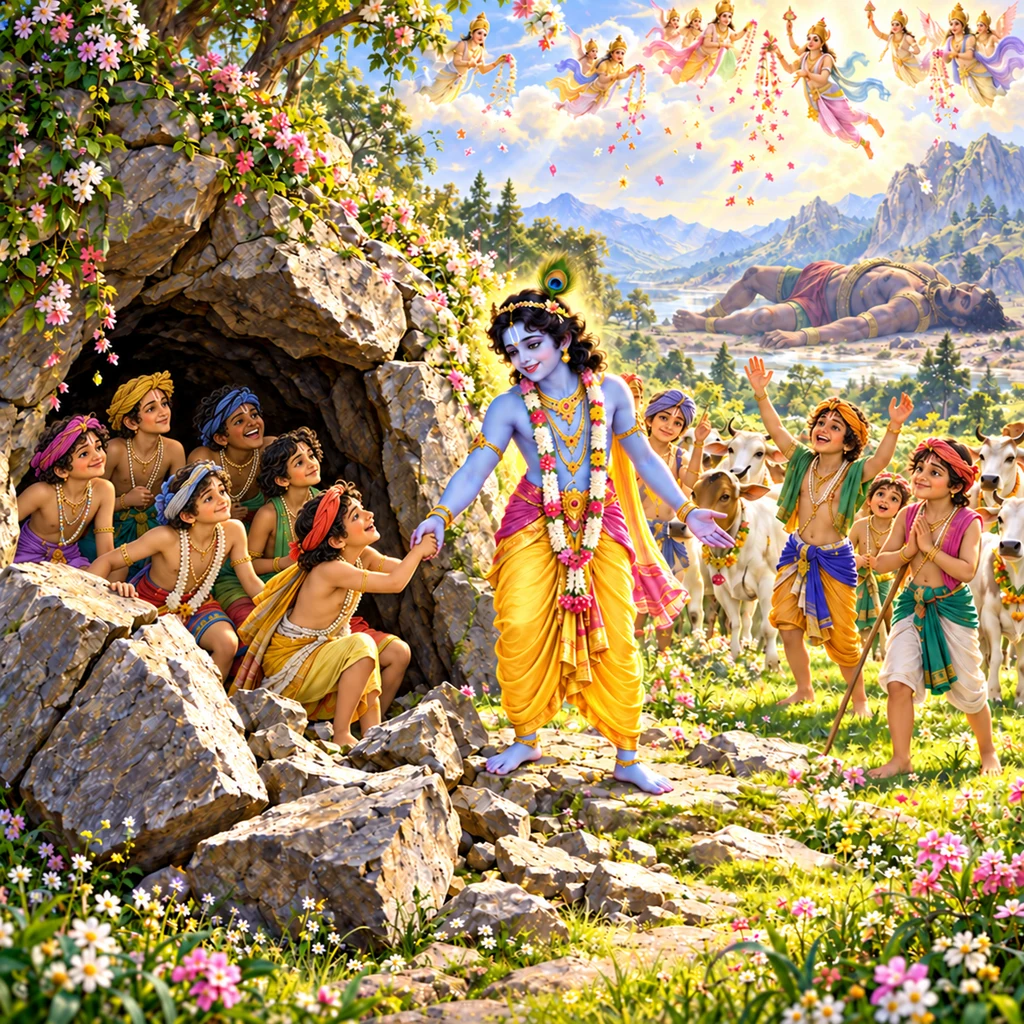
In ŚB 10.37.26–27 the cowherd boys graze their animals on the mountain slopes and happily play the roles of thieves, shepherds and sheep. In 10.37.28 Vyoma, the son of the demon Maya, assumes the guise of a cowherd boy and begins abducting the boys acting as sheep. In 10.37.29 he carries them into a mountain cave and seals its entrance with a huge boulder. In 10.37.30 Kṛṣṇa, the shelter of all saintly devotees, recognizes the deception and seizes Vyomāsura like a lion grabbing a wolf. In 10.37.31–32 the demon assumes his huge mountain-like form but cannot escape the Lord’s grip and is defeated. In 10.37.33 Kṛṣṇa smashes the boulder, leads His friends to safety and returns to Gokula while the cowherd boys and demigods sing His glories. The illustration shows this concluding moment of rescue; the arrangement of boys, cows, flowers and landscape is artistic presentation that does not alter the action of the verses.
Saṅkṣepa (short meaning)
Vyomāsura abducts the cowherd boys and seals them inside a mountain cave. Kṛṣṇa recognizes the deception, defeats the demon, smashes the huge boulder and leads His friends to safety.
Śāstra-pramāṇa (key events from the text)
A carefree game on the mountain slopes
(Śrīmad-Bhāgavatam 10.37.26)
Deception disguised as friendship
(Śrīmad-Bhāgavatam 10.37.28)
The cave is sealed with a boulder
(Śrīmad-Bhāgavatam 10.37.29)
Kṛṣṇa sees the hidden danger
(Śrīmad-Bhāgavatam 10.37.30)
The demon’s strength cannot surpass the Lord
(Śrīmad-Bhāgavatam 10.37.31)
The friends are led to safety
(Śrīmad-Bhāgavatam 10.37.33)
Tattva (essential teachings) — with śāstra
The Lord knows even a hidden threat
Kṛṣṇa is the shelter of devotees
An outward disguise cannot hide consciousness from the Lord
Material power is limited
Protection culminates in deliverance
Sevā today (practice for this day)
How to use this darśanam page
View the image, read the narration and śāstra-pramāṇa, contemplate the tattva, and complete the meditation through service. Follow the sequence: darśana → śravaṇa → manana → seva.