Pramāṇa (Śāstra reference)
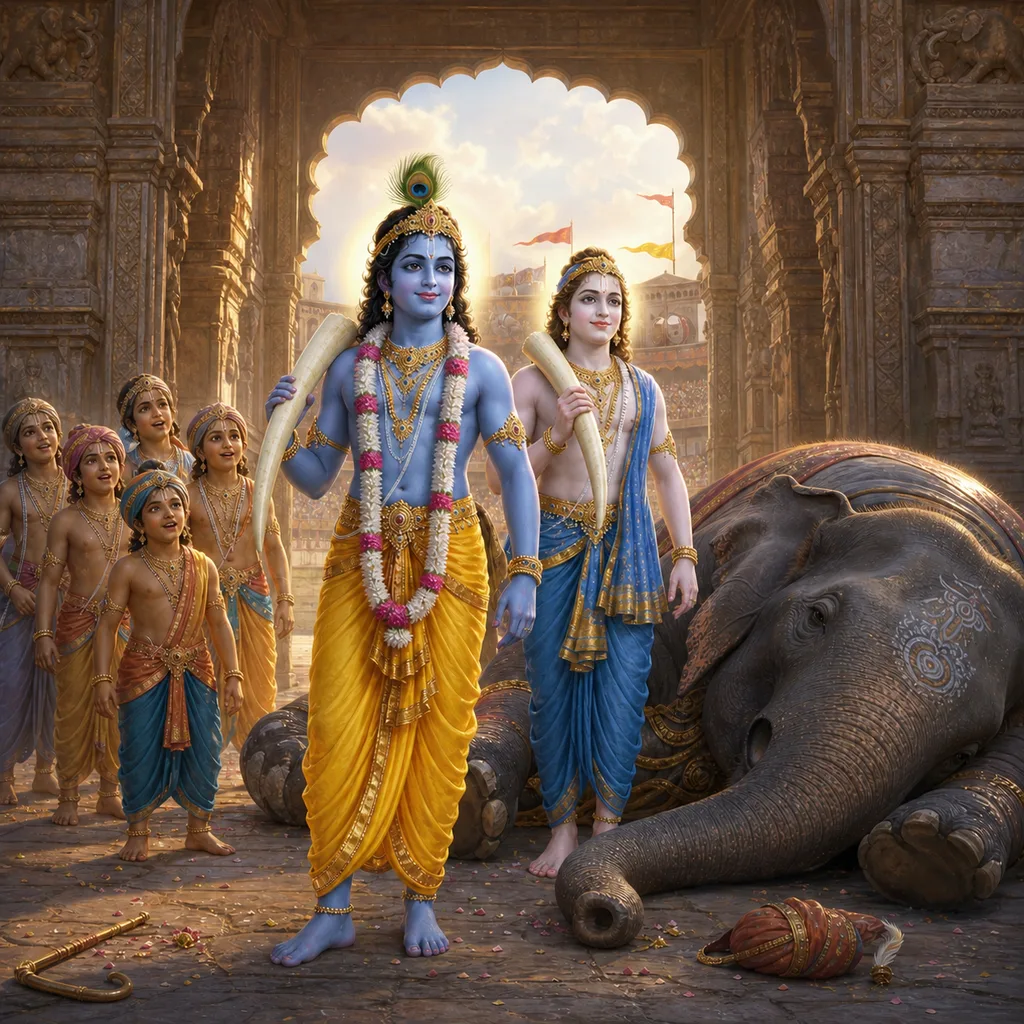
Śrīmad-Bhāgavatam 10.43.1–18 describes how Krishna and Balarama approached Kamsa’s wrestling arena after completing Their morning duties. At the entrance, the elephant-keeper deliberately blocked Their path with the powerful elephant Kuvalayapida. Goaded to attack, the elephant seized Krishna with his trunk, but the Lord repeatedly escaped, dragged the elephant by its tail, outmaneuvered it and made it fall. When Kuvalayapida charged again, Krishna seized its trunk with one hand and threw it down. The Lord then pulled out a tusk and defeated the elephant and its keepers. Krishna and Balarama entered the arena, each carrying one of the elephant’s tusks, while Kamsa became overwhelmed with fear.
Saṅkṣepa (short meaning)
Kuvalayapida was placed at the gate not as an animal acting on its own, but as an instrument of Kamsa’s planned murder. Krishna does not seek conflict; He asks that the way be opened. When the attack comes, the Lord remains fearless, agile and completely beyond the elephant’s power. By carrying the tusk into the arena, Krishna makes Kamsa’s weapon a visible sign that no obstacle can stop the Supreme Lord’s purpose.
Śāstra-pramāṇa (key points from the text)
The way is deliberately blocked
(Śrīmad-Bhāgavatam 10.43.1–18)
Krishna first orders him to move
(Śrīmad-Bhāgavatam 10.43.1–18)
Kuvalayapida charges
(Śrīmad-Bhāgavatam 10.43.1–18)
The Lord remains beyond capture
(Śrīmad-Bhāgavatam 10.43.1–18)
Krishna throws down the elephant
(Śrīmad-Bhāgavatam 10.43.1–18)
The brothers enter with the tusks
(Śrīmad-Bhāgavatam 10.43.1–18)
Tattva (essential teaching) — with śāstra
Material power cannot obstruct Bhagavan
The Lord protects without fear
Hostility exposes its own weakness
Divine strength remains beautiful
Sevā today (practice for this day)
How to use this darśanam page
View the image, read the narration and śāstra-pramāṇa, contemplate the tattva, and complete the practice through seva. Follow the sequence: darśana → śravaṇa → manana → seva.