Pramāṇa (Śāstra reference)
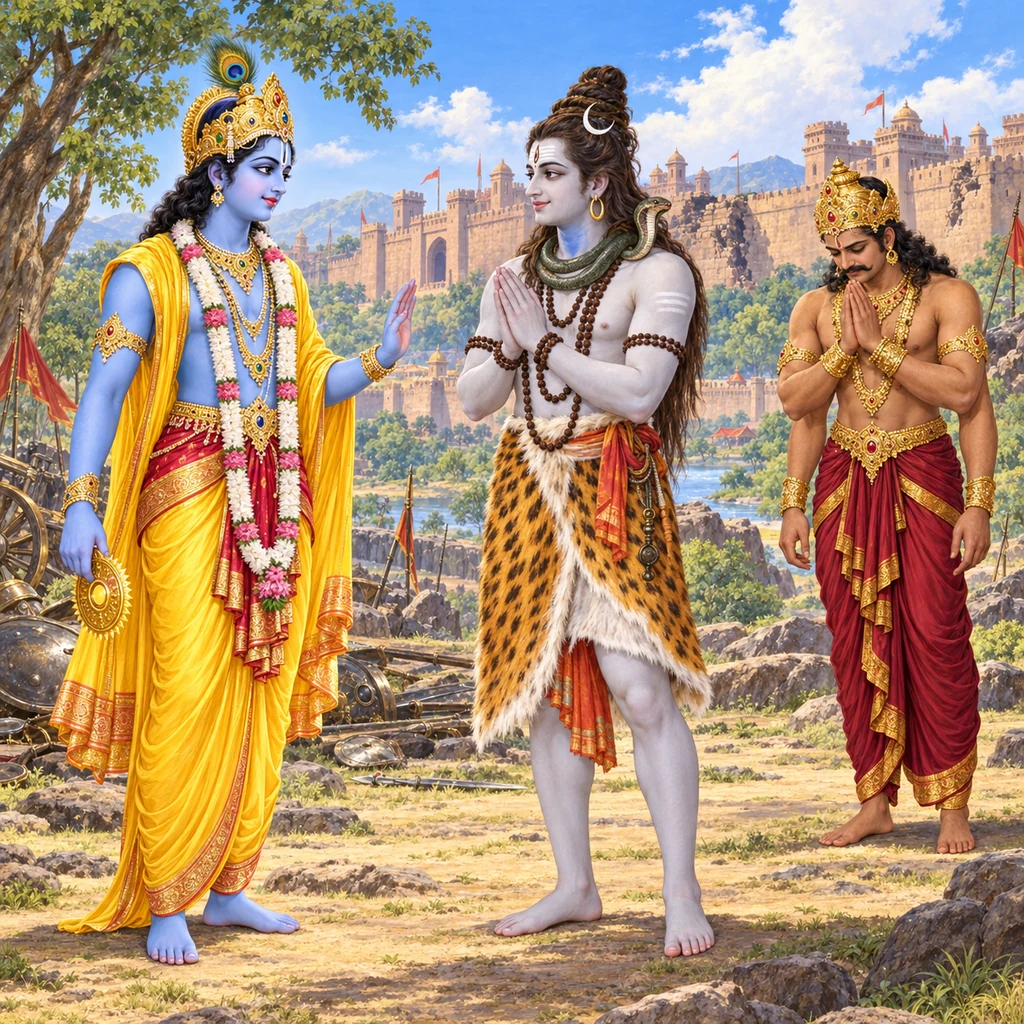
This scene concludes Bāṇāsura-yuddha-līlā. On learning from Nārada that Aniruddha had been captured, the Vṛṣṇis travelled to Śoṇitapura (SB 10.63.2). During the battle Kṛṣṇa cut Bāṇāsura’s arms with His Sudarśana disc, and Śiva approached the Lord out of compassion for his devotee (10.63.33). Śiva appeals for mercy (10.63.45), and Kṛṣṇa accepts his request (10.63.46). The Lord also recalls His promise to Prahlāda not to kill his descendants (10.63.47). In verses 48–49 He explains that He has humbled Bāṇāsura’s pride and left him four arms; Bāṇa is promised freedom from fear, old age and death, and a place among Śiva’s principal attendants. The illustration presents this assurance before Bāṇa touches his head to the ground in verse 50. Standing poses, gestures, sunlight and architecture are artistic choices. Kṛṣṇa’s royal appearance with a peacock feather and Śiva’s traditional attributes belong to iconography, not a list of visual details supplied by these verses.
Saṅkṣepa (short meaning)
The battle at Śoṇitapura ends in mercy. Śiva asks Kṛṣṇa to spare his devotee Bāṇāsura, and the Lord accepts the appeal. He remembers His promise to Prahlāda not to kill his descendants. Bāṇa’s pride has been humbled, but his life is preserved. He retains four arms and can now look forward to serving beside Śiva, free from his former fear.
Śāstra-pramāṇa (key points from the text)
A journey for Aniruddha
(Śrīmad-Bhāgavatam 10.63.2)
Śiva’s compassion
(Śrīmad-Bhāgavatam 10.63.33)
The Lord’s reply
(Śrīmad-Bhāgavatam 10.63.46)
Four remaining arms
(Śrīmad-Bhāgavatam 10.63.49)
Obeisances and Aniruddha’s release
(Śrīmad-Bhāgavatam 10.63.50)
Tattva (essential teaching) — with śāstra
Kṛṣṇa remains true to His word
Compassion inspires intercession
Respect between the Lord and His devotee
Strength receives a new direction
Sevā today (practice for this day)
How to use this darśanam page
View the image, read the narration and śāstra-pramāṇa, contemplate the tattva, and complete the practice through seva. Follow the sequence: darśana → śravaṇa → manana → seva.