Pramāṇa (Śāstra reference)
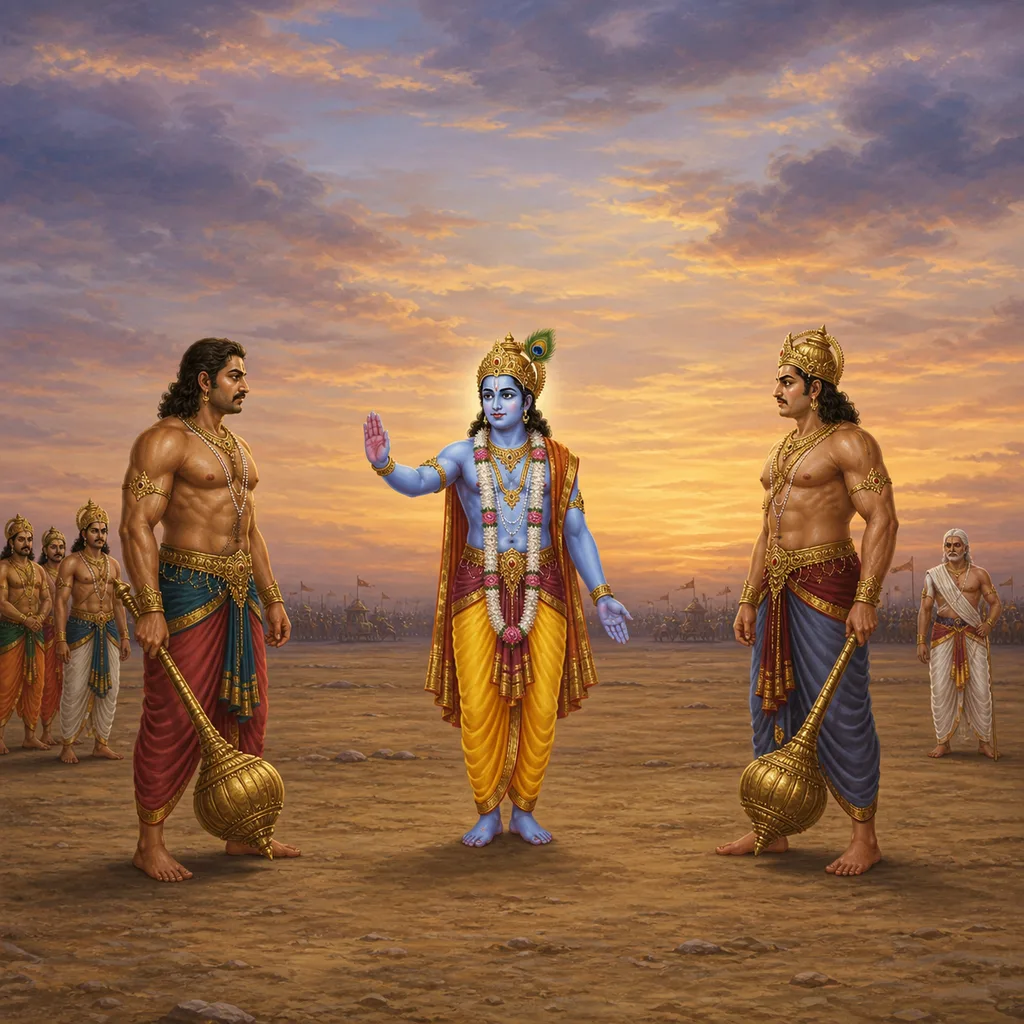
Mahabharata, Shalya-parva describes the final mace-duel setting between Bhima and Duryodhana after the great battle of Kurukshetra. The duel is not a place for uncontrolled rage; it stands before rules, vows, destiny, and Krishna’s higher guidance. Krishna’s presence shows that even a mighty warrior’s strength must remain under divine intelligence and dharma.
Saṅkṣepa (short meaning)
This lila reveals that strength becomes auspicious only when it is governed by dharma and guided by the Lord. Bhima carries deep anger and a terrible vow against Duryodhana, yet Krishna does not allow raw rage to become the master. The Lord stands as the inner guide of the Pandavas, keeping the moment from becoming mere revenge. The scene teaches that a devotee may possess great force, courage, and righteous indignation, but these must be offered to Krishna’s will. Power without guidance becomes danger; power under Krishna becomes service to dharma.
Śāstra-pramāṇa (key points from the text)
The final duel is arranged
(Mahabharata, Shalya-parva — Bhima and Duryodhana’s mace duel)
Warrior rules remain present
(Mahabharata, Shalya-parva — Bhima and Duryodhana’s mace duel)
Bhima’s anger is intense
(Mahabharata, Shalya-parva — Bhima and Duryodhana’s mace duel)
Krishna guides the Pandavas
(Mahabharata, Shalya-parva — Bhima and Duryodhana’s mace duel)
Strength is restrained by dharma
(Mahabharata, Shalya-parva — Bhima and Duryodhana’s mace duel)
Dharma is restored through guidance
(Mahabharata, Shalya-parva — Bhima and Duryodhana’s mace duel)
Tattva (essential teaching) — with śāstra
Strength needs Krishna’s guidance
Anger must be purified
Dharma is higher than force
The Lord protects His devotees from within
Sevā today (practice for this day)
How to use this darśanam page
View the image, read the narration and śāstra-pramāṇa, contemplate the tattva, and complete the practice through seva. Follow the sequence: darśana → śravaṇa → manana → seva.