Pramāṇa (Śāstra reference)
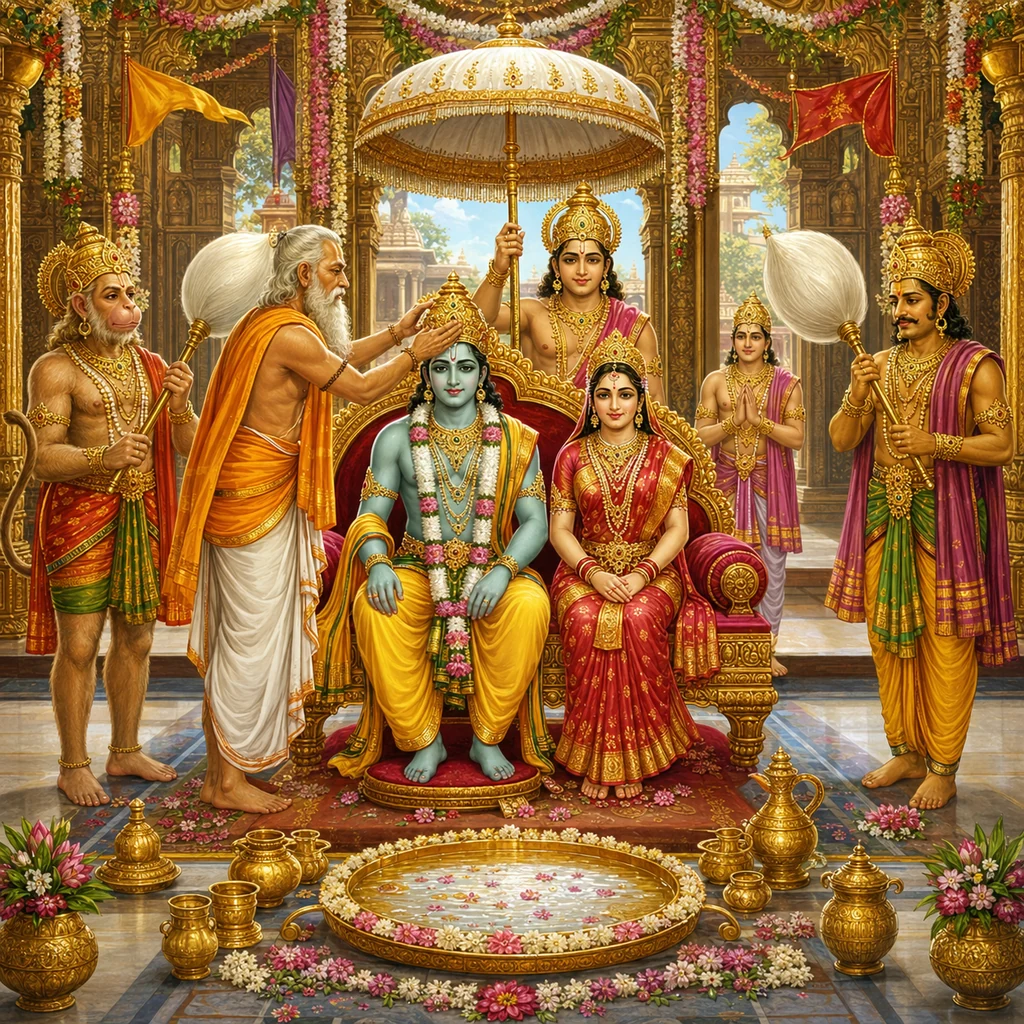
In Vālmīki Rāmāyaṇa 6.128, water for Rāma’s coronation is brought from five hundred rivers and the four oceans (6.128.49–58). The elderly Vasiṣṭha, accompanied by other brāhmaṇas, seats Rāma together with Sītā on a seat made of precious stones (6.128.59). Vasiṣṭha, Vāmadeva, Jābāli, Kāśyapa, Kātyāyana, Suyajña, Gautama and Vijaya consecrate Rāma with clear, fragrant water (6.128.60–61). Priests, maidens, ministers, warriors and merchants participate, while the guardians of the worlds and assembled devas bestow the essence of auspicious herbs (6.128.62–63). The ancient jewel-studded crown, fashioned by Brahmā and formerly used for Manu and the kings of his line, is placed according to rule; Vasiṣṭha and the officiating priests then adorn Rāma with the crown and ornaments (6.128.64–67). Shatrughna holds a beautiful white parasol above Him, while Sugrīva and Vibhīṣaṇa each hold a white royal fly-whisk (6.128.68–69). The illustration focuses on these exact elements of the coronation and does not portray a generic European crowning ceremony.
Saṅkṣepa (short meaning)
After completing His exile and defeating Ravana, Lord Rama returns to Ayodhya. Vasistha seats Rama with Sita on a jewel-studded throne, performs the sacred consecration and places the ancient royal crown upon Him. Shatrughna, Sugriva and Vibhishana joyfully offer royal service.
Śāstra-pramāṇa (key points from the text)
Sacred waters are gathered
(Vālmīki Rāmāyaṇa, Yuddha-kāṇḍa 6.128.59–69)
Rama and Sita sit together
(Vālmīki Rāmāyaṇa, Yuddha-kāṇḍa 6.128.59–69)
The priests perform abhisheka
(Vālmīki Rāmāyaṇa, Yuddha-kāṇḍa 6.128.59–69)
The ancient crown is bestowed
(Vālmīki Rāmāyaṇa, Yuddha-kāṇḍa 6.128.59–69)
Devotees offer royal service
(Vālmīki Rāmāyaṇa, Yuddha-kāṇḍa 6.128.59–69)
Tattva (essential teaching) — with śāstra
Dharma culminates in responsible service
The Lord honours sacred order
Many kinds of service unite around the Lord
Separation resolves in auspicious reunion
Sevā today (practice for this day)
How to use this darśanam page
View the image, read the narration and śāstra-pramāṇa, contemplate the tattva, and complete the practice through seva. Follow the sequence: darśana → śravaṇa → manana → seva.