Pramāṇa (Śāstra reference)
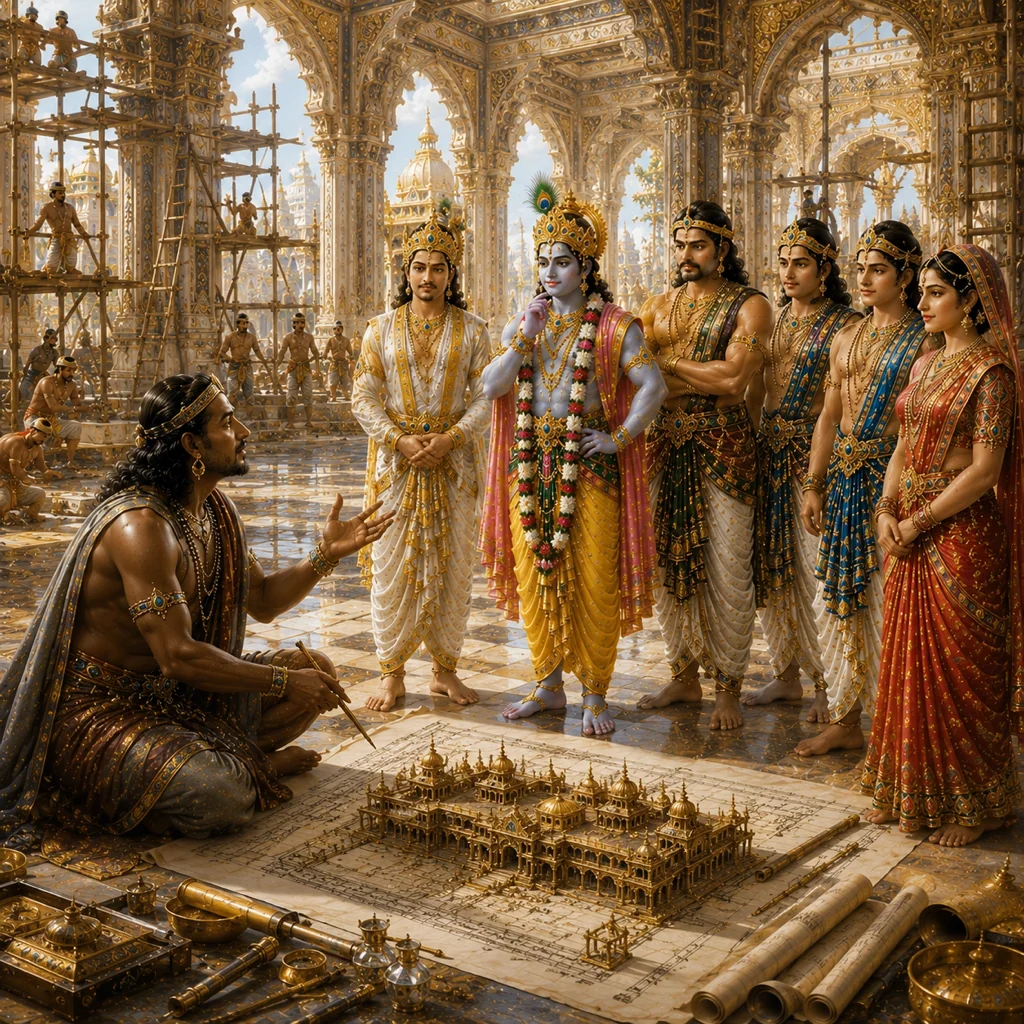
Mahābhārata, Sabha-parva — after being saved during the burning of the Khandava forest, Maya-danava, in gratitude, builds a marvelous assembly hall for King Yudhisthira at Indraprastha.
Saṅkṣepa (short meaning)
This lila reveals how even one who belongs to the daitya race can become an instrument in the service of dharma when touched by grace and gratitude. Saved from destruction, Maya-danava does not remain indifferent. In deep thankfulness, he offers his extraordinary skill and creates a sabha unlike any seen in the world. The Maya-sabha becomes a symbol of royal splendor, divine arrangement, and the glory of the Pandavas under the protection of the Lord. What is normally associated with illusion and material artistry is here offered in service to righteousness.
Śāstra-pramāṇa (key points from the text)
Maya-danava is saved
(Mahābhārata, Sabha-parva)
He offers grateful service
(Mahābhārata, Sabha-parva)
The assembly hall is built
(Mahābhārata, Sabha-parva)
The hall is extraordinary
(Mahābhārata, Sabha-parva)
The Maya-sabha becomes famous
(Mahābhārata, Sabha-parva)
Tattva (essential teaching) — with śāstra
Gratitude transforms ability
Artistry becomes auspicious in service
Royal splendor should support dharma
Splendor must serve divine order
Sevā today (practice for this day)
How to use this darśanam page
View the image, read the narration and śāstra-pramāṇa, contemplate the tattva, and complete the practice through seva. Follow the sequence: darśana → śravaṇa → manana → seva.