Pramāṇa (Śāstra reference)
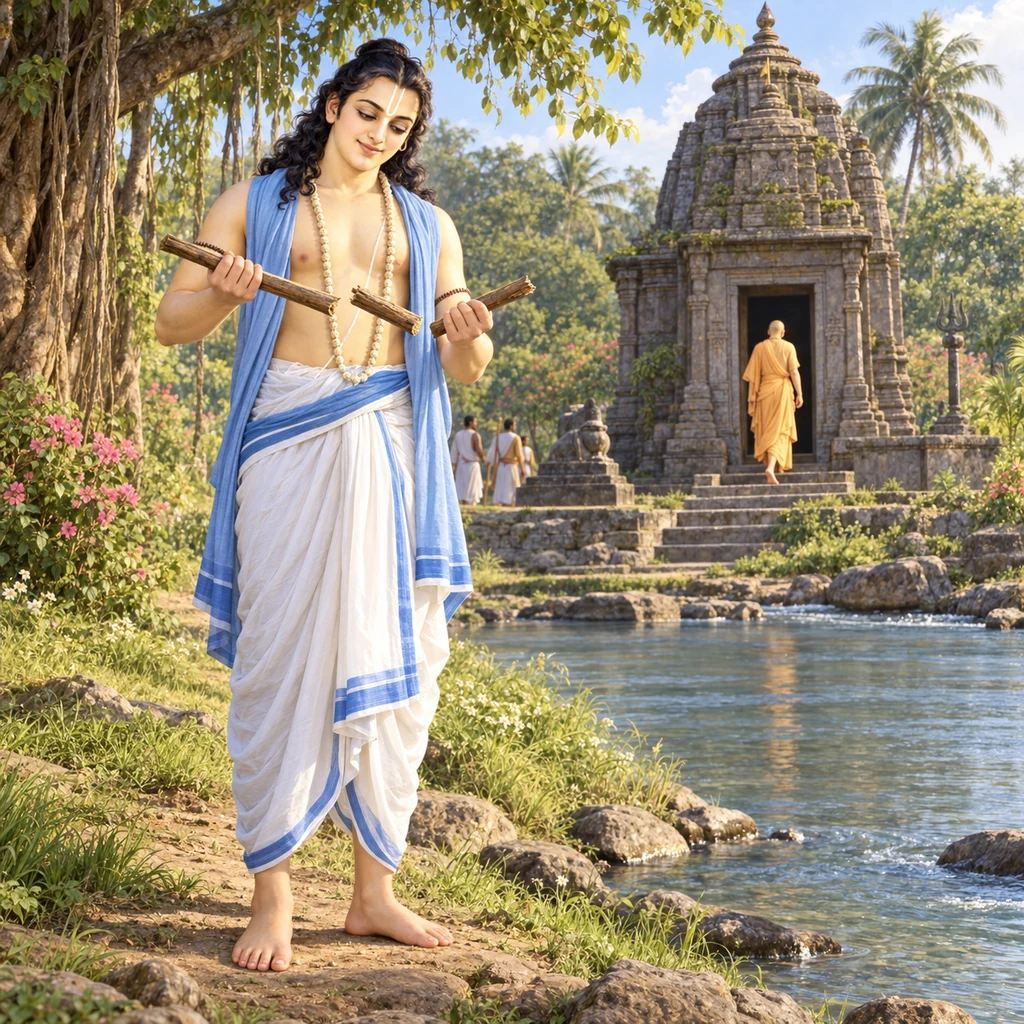
Cc. Madhya 5.141 states that at Kamalapura Mahāprabhu bathed in the Bhārgī River and entrusted His sannyāsa staff to Nityānanda Prabhu. Verses 5.142–143 describe the Lord entering the temple of Kapoteśvara while Nityānanda breaks the staff into three pieces and throws them into the river, thereafter known as Daṇḍa-bhaṅga-nadī. In 5.148–151 Mahāprabhu asks for the staff, and 5.152–158 describes His outward displeasure and the pastime's deep meaning. The artwork shows the instant after the staff is broken but before its pieces are thrown into the water. The figures' appearance, temple, riverbank and lighting are artistic details not literally described in the verses.
Saṅkṣepa (short meaning)
At Kamalapura, Śrī Caitanya Mahāprabhu entrusted His sannyāsa staff to Nityānanda Prabhu and entered the temple of Kapoteśvara. Knowing the Lord's supreme position, Nityānanda broke the staff into three pieces and threw them into the Bhārgī River. Later Mahāprabhu asked for the staff and outwardly showed displeasure. Kṛṣṇadāsa Kavirāja Gosvāmī emphasizes that the meaning of this confidential pastime is very deep.
Śāstra-pramāṇa (key points from the text)
The staff is entrusted to Nityānanda
(Śrī Caitanya-caritāmṛta, Madhya 5.141)
Mahāprabhu enters the temple
(Śrī Caitanya-caritāmṛta, Madhya 5.142-143)
The staff is broken
(Śrī Caitanya-caritāmṛta, Madhya 5.142-143)
Mahāprabhu asks for it
(Śrī Caitanya-caritāmṛta, Madhya 5.148)
A confidential meaning
(Śrī Caitanya-caritāmṛta, Madhya 5.157)
Tattva (essential teaching) — with śāstra
The staff and full dedication
Mahāprabhu is beyond an external sign
The Lord teaches by example
Not an ordinary quarrel
Sevā today (practice for this day)
How to use this darśanam page
View the image, read the narration and śāstra-pramāṇa, contemplate the tattva, and complete the practice through seva. Follow the sequence: darśana → śravaṇa → manana → seva.