Pramāṇa (Śāstra reference)
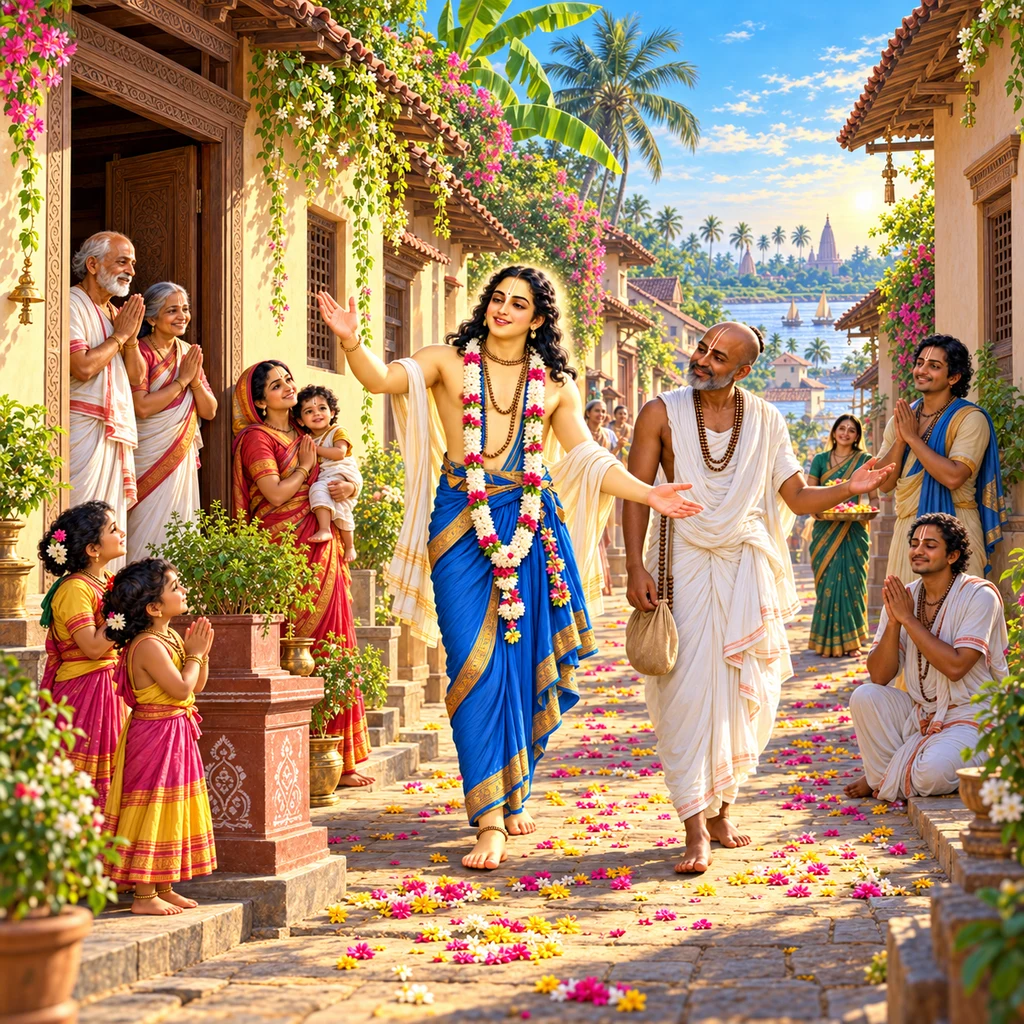
In his purport to Śrī Caitanya-caritāmṛta, Ādi-līlā 17.17, Śrīla Prabhupāda explains that by Lord Caitanya’s order Nityānanda Prabhu and Haridāsa Ṭhākura used to preach Kṛṣṇa consciousness from door to door. During this service they encountered Jagāi and Mādhāi. The illustration does not depict that confrontation; it presents their daily preaching itself as the two companions of Mahāprabhu walk through Navadvīpa and address its residents. The architecture, arrangement of homes, families, flowers and view of the Ganges are artistic presentation and do not add another event to the source.
Saṅkṣepa (short meaning)
By the will of Śrī Caitanya Mahāprabhu, Nityānanda Prabhu and Haridāsa Ṭhākura go from door to door in Navadvīpa, inviting people to turn toward Kṛṣṇa and chant His holy names.
Śāstra-pramāṇa (key events from the text)
Mahāprabhu’s order
(Śrī Caitanya-caritāmṛta, Ādi 17.17)
Mercy reaches every home
(Śrī Caitanya-caritāmṛta, Ādi 17.17)
The Holy Name is open to everyone
(Śrī Caitanya-caritāmṛta, Ādi 17.17)
Preaching is performed together
(Śrī Caitanya-caritāmṛta, Ādi 17.17)
Compassion becomes action
(Śrī Caitanya-caritāmṛta, Ādi 17.17)
The path reaches the most fallen
(Śrī Caitanya-caritāmṛta, Ādi 17.17)
Tattva (essential teachings) — with śāstra
Service begins with the Lord’s will
Mercy is not confined within temple walls
Personal example strengthens instruction
Devotee cooperation sustains the mission
No one should be judged hopeless in advance
Sevā today (practice for this day)
How to use this darśanam page
View the image, read the narration and śāstra-pramāṇa, contemplate the tattva, and complete the meditation through service. Follow the sequence: darśana → śravaṇa → manana → seva.