Pramāṇa (Śāstra reference)
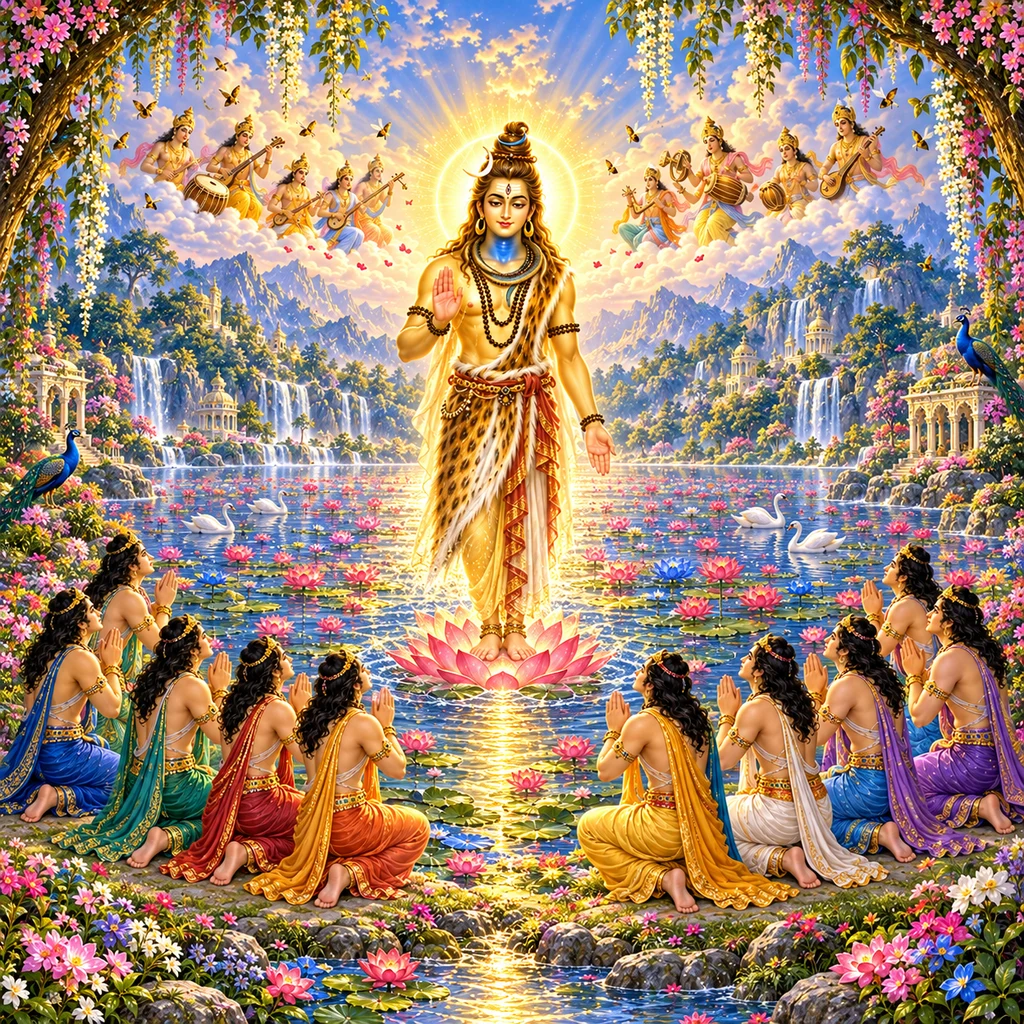
ŚB 4.24.13 states that King Prācīnabarhi had ten pious sons known as the Pracetās. Accepting their father’s instruction, they traveled west to perform austerities (4.24.19). On their journey they saw a vast calm lake, like the mind of a great soul (4.24.20), filled with blue and red lotuses, birds, trees, creepers, fragrance and humming bees (4.24.21–22). The princes then heard drums, kettledrums and other pleasing musical sounds (4.24.23). Lord Śiva emerged from the water with his associates: his body shone like molten gold, his throat was bluish, and his three eyes looked mercifully upon his worshipers; musicians glorified him, and the amazed Pracetās fell at his lotus feet (4.24.24–25). Pleased by their pious conduct, Lord Śiva revealed himself to show them mercy (4.24.26–27). He explained that one who is surrendered to the Supreme Personality of Godhead, Kṛṣṇa, is especially dear to him (4.24.28), and he praised the mutual affection between himself and the Lord’s devotees (4.24.30). Śiva then asked the Pracetās to hear attentively a pure and auspicious prayer that leads to life’s ultimate goal (4.24.31). Maitreya identifies Śiva as a great devotee of Lord Nārāyaṇa who, out of causeless mercy, imparted these prayers to the princes (4.24.32–33). Attentive recitation and hearing of the prayers frees one from the bondage of fruitive activity and leads to perfection in life (4.24.78–79). The illustration preserves the ten Pracetās, molten-gold luster, bluish throat, three eyes and musicians described in the text. Lord Śiva’s pose upon an open lotus, the colors of the princes’ garments, the celestial placement of the musicians, distant pavilions and mountain landscape are artistic presentation; the text directly states that Lord Śiva emerged from the water with his associates.
Saṅkṣepa (short meaning)
The ten sons of King Prācīnabarhi, known as the Pracetās, set out to perform austerities and reach a wondrous lake filled with blue and red lotuses. Hearing celestial music, they behold Lord Śiva emerging from the water: his body shines like molten gold, his throat is bluish, and his three eyes are filled with mercy. The Pracetās bow at his feet. Pleased with their piety, Lord Śiva glorifies surrender to Kṛṣṇa and gives them the pure Rudra-gītā prayers that lead to perfection in life.
Śāstra-pramāṇa (key events from the text)
The Pracetās accept instruction
(Śrīmad-Bhāgavatam 4.24.19)
A lake like the mind of a great soul
(Śrīmad-Bhāgavatam 4.24.20)
Celestial instruments resound
(Śrīmad-Bhāgavatam 4.24.23)
Lord Śiva emerges from the water
(Śrīmad-Bhāgavatam 4.24.24-25)
Mercy upon the gentle princes
(Śrīmad-Bhāgavatam 4.24.27)
The gift of the Rudra-gītā
(Śrīmad-Bhāgavatam 4.24.31)
Tattva (essential teachings) — with śāstra
A devotee of Kṛṣṇa is dear to Lord Śiva
Mutual honor among Vaiṣṇavas
Prayer leads to the ultimate goal
Śiva is a great devotee of Nārāyaṇa
Hearing brings freedom
Sevā today (practice for this day)
How to use this darśanam page
View the image, read the narration and śāstra-pramāṇa, contemplate the tattva, and complete the meditation through service. Follow the sequence: darśana → śravaṇa → manana → seva.