Pramāṇa (Śāstra reference)
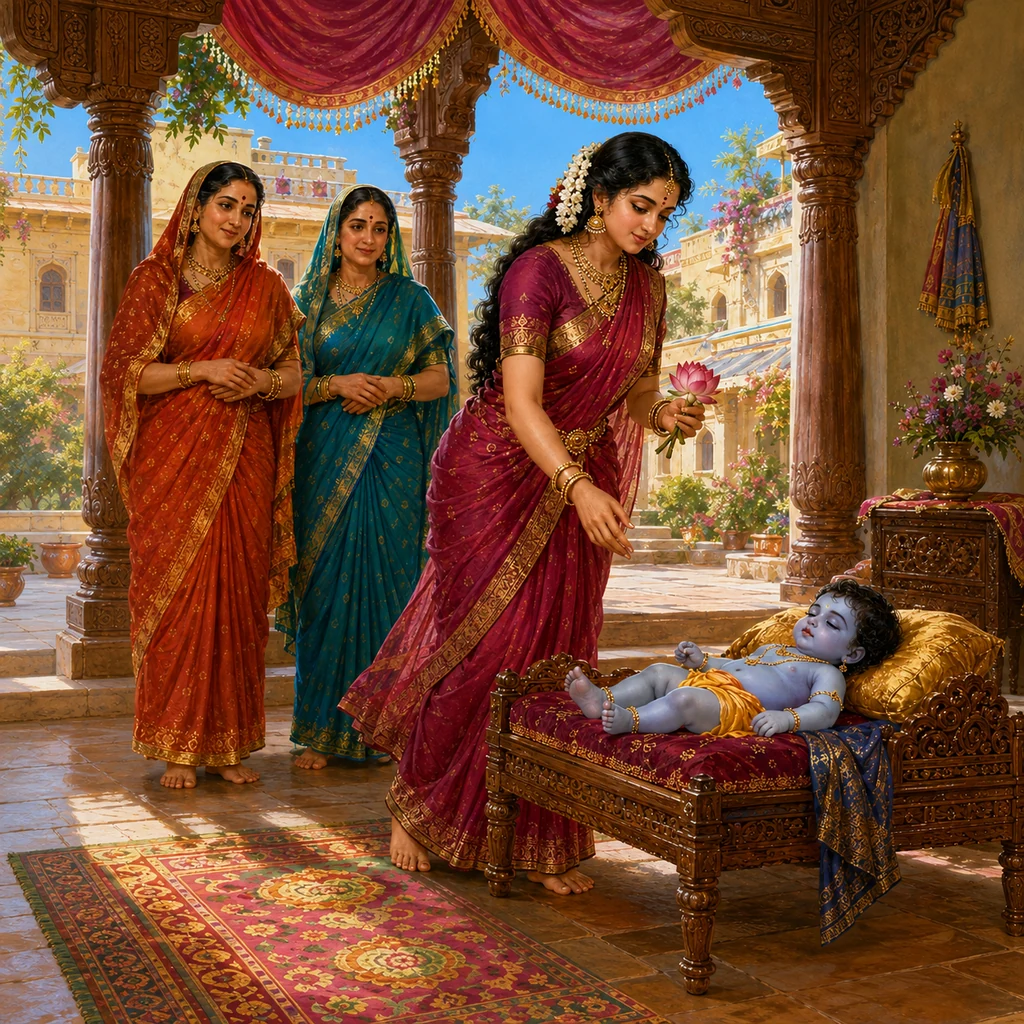
Śrīmad-Bhāgavatam 10.6.4 describes the rākṣasī Pūtanā entering Gokula in the guise of a beautiful woman. Verses 10.6.5–6 mention mallikā flowers in her hair, fine clothing, shining earrings and a lotus; the gopīs mistake her for the goddess of fortune. In Nanda’s home she finds Kṛṣṇa on a bed, His limitless power concealed like fire beneath ashes (10.6.7). Verse 10.6.8 explicitly says that Kṛṣṇa closes His eyes, knowing her intention; she then takes Him onto her lap. Yaśodā and Rohiṇī are present and do not intervene (10.6.9). Śrīla Prabhupāda’s purport to that verse explains their condition through yogamāyā. The painting selects the approach to the bed, before Pūtanā lifts the child. Lighting, fabric colours and the room’s decoration are artistic choices; the participants and actions follow the cited verses.
Saṅkṣepa (short meaning)
A stranger with flowers in her hair and a lotus in her hand enters Nanda’s home in Gokula. She is Pūtanā, concealing a hostile purpose behind a beautiful appearance. Infant Kṛṣṇa rests peacefully on His bed, His unlimited power hidden in His childhood pastime. Yaśodā and Rohiṇī watch quietly. The Lord knows who has approached Him, and the outcome of the encounter is already within His power.
Śāstra-pramāṇa (key points from the text)
Pūtanā assumes a disguise
(Śrīmad-Bhāgavatam 10.6.4–10; 10.6.35–38)
The villagers admire her appearance
(Śrīmad-Bhāgavatam 10.6.4–10; 10.6.35–38)
Kṛṣṇa rests in Nanda’s home
(Śrīmad-Bhāgavatam 10.6.4–10; 10.6.35–38)
The Lord knows her purpose
(Śrīmad-Bhāgavatam 10.6.4–10; 10.6.35–38)
The continuation reveals mercy
(Śrīmad-Bhāgavatam 10.6.4–10; 10.6.35–38)
Tattva (essential teaching) — with śāstra
The infant remains the Supreme Lord
Kṛṣṇa knows the heart
The mothers participate through yogamāyā
Mercy surpasses hostile intention
Sevā today (practice for this day)
How to use this darśanam page
View the image, read the narration and śāstra-pramāṇa, contemplate the tattva, and complete the practice through seva. Follow the sequence: darśana → śravaṇa → manana → seva.