Pramāṇa (Śāstra reference)
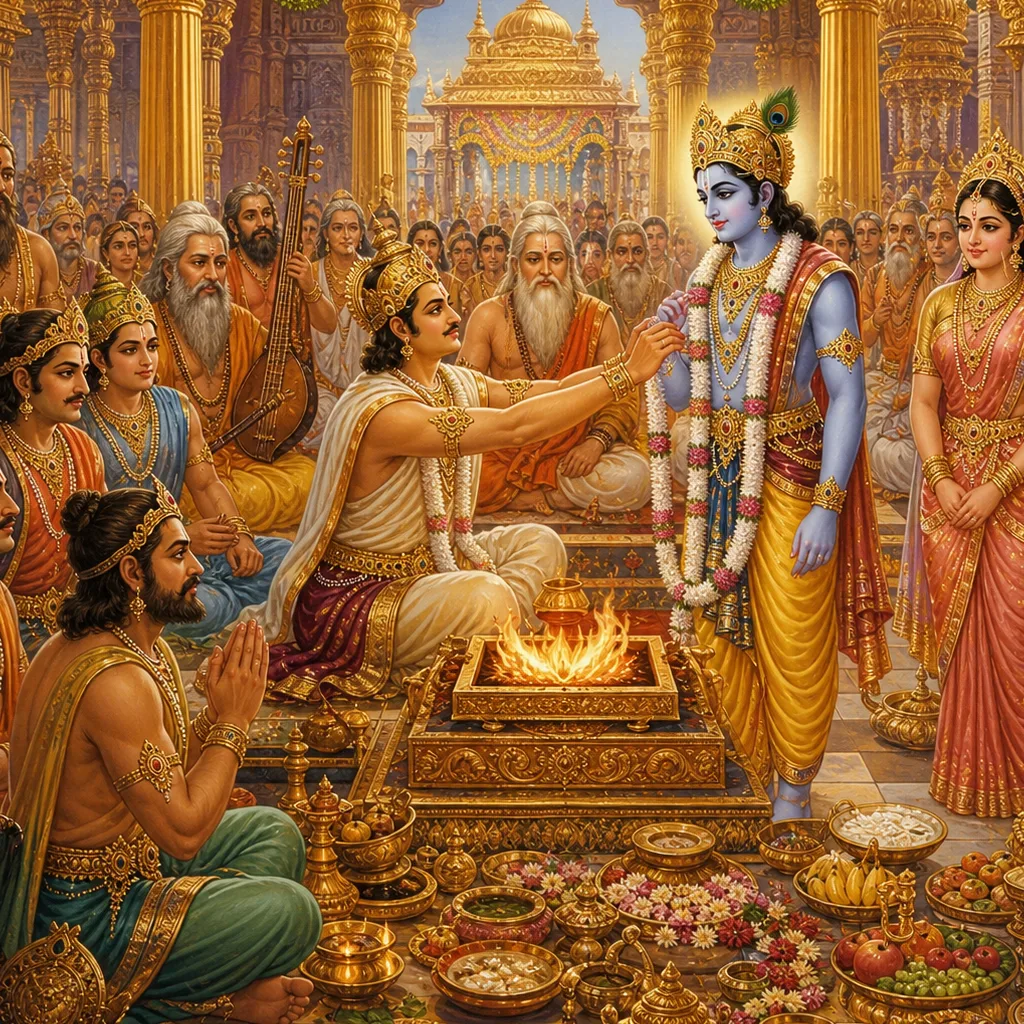
Śrīmad-Bhāgavatam, Canto 10, Chapter 74 and the Mahābhārata, Sabhā-parva describe how King Yudhiṣṭhira performs the Rājasūya sacrifice. In the royal assembly the sages, elders, kings and heroes consider who should receive the first worship. Sahadeva declares that Lord Krishna, the Supreme Personality of Godhead, is the most worthy recipient of agra-pūjā. King Yudhiṣṭhira then worships Krishna with love, reverence and full approval from the devotees.
Saṅkṣepa (short meaning)
This lila reveals the true perfection of Vedic sacrifice: Krishna is the supreme object of worship. King Yudhiṣṭhira’s Rājasūya-yajña displays royal splendor, Vedic precision and noble responsibility, yet its real glory is that the Lord is placed in the center. In a hall filled with sages, kings and heroes, Sahadeva recognizes Krishna’s supreme position and Yudhiṣṭhira honors Him with devotion. The lila teaches that dharma, yajña, learning and royal power become complete only when offered to Bhagavan.
Śāstra-pramāṇa (key points from the text)
Yudhiṣṭhira performs the Rājasūya
(Śrīmad-Bhāgavatam, Canto 10, Chapter 74; Mahābhārata, Sabhā-parva)
The first worship is discussed
(Śrīmad-Bhāgavatam, Canto 10, Chapter 74; Mahābhārata, Sabhā-parva)
Sahadeva glorifies Krishna
(Śrīmad-Bhāgavatam, Canto 10, Chapter 74; Mahābhārata, Sabhā-parva)
The Pāṇḍavas worship the Lord
(Śrīmad-Bhāgavatam, Canto 10, Chapter 74; Mahābhārata, Sabhā-parva)
The devotees rejoice
(Śrīmad-Bhāgavatam, Canto 10, Chapter 74; Mahābhārata, Sabhā-parva)
Envy becomes exposed
(Śrīmad-Bhāgavatam, Canto 10, Chapter 74; Mahābhārata, Sabhā-parva)
Tattva (essential teaching) — with śāstra
Krishna is the goal of yajña
Power must serve dharma
Intimacy does not lessen supremacy
Devotion recognizes rightful honor
Sevā today (practice for this day)
How to use this darśanam page
View the image, read the narration and śāstra-pramāṇa, contemplate the tattva, and complete the practice through seva. Follow the sequence: darśana → śravaṇa → manana → seva.