Pramāṇa (Śāstra reference)
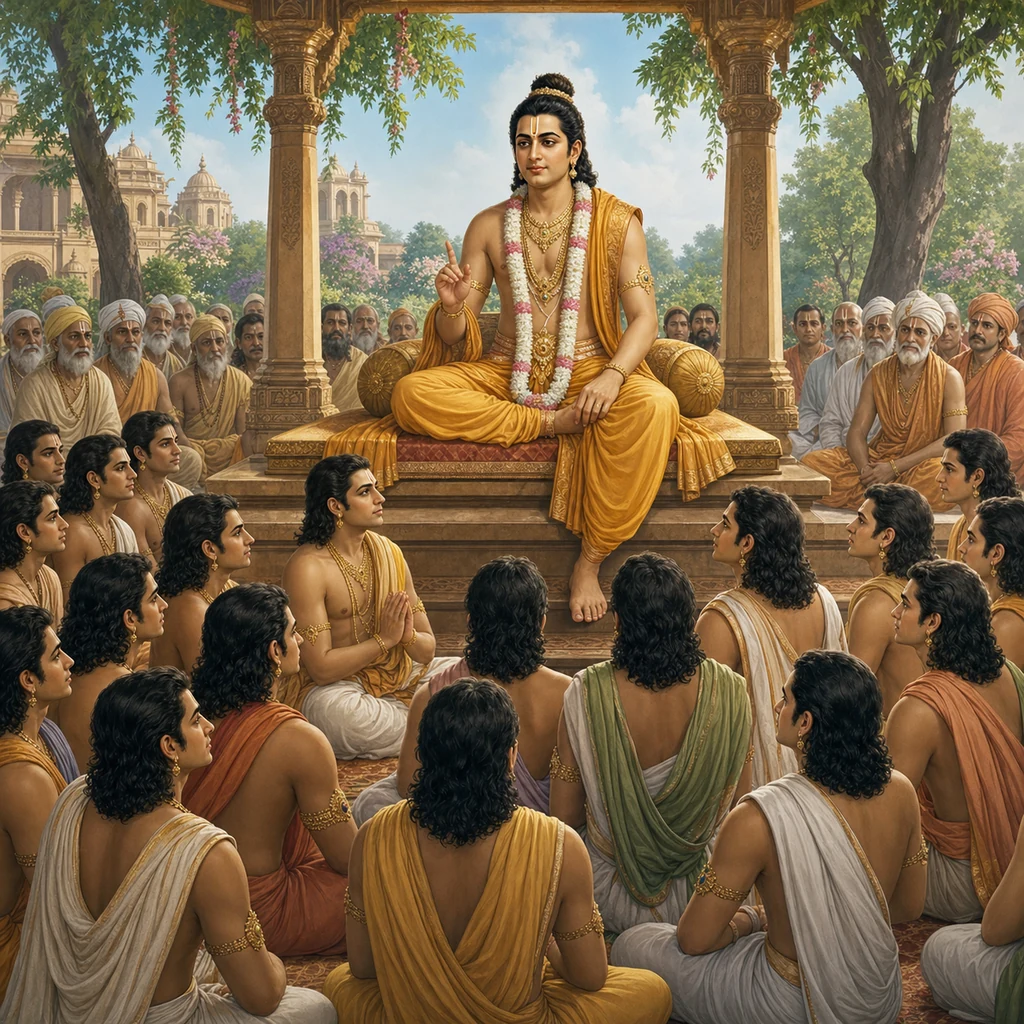
Śrīmad-Bhāgavatam 5.4.19 places this teaching at Brahmāvarta. Lord Ṛṣabhadeva speaks in an assembly of foremost brāhmaṇa sages while the citizens listen. His sons are described as attentive, humble, affectionate and self-controlled. In the opening instruction, 5.5.1, the Lord tells His sons that human life is not meant for exhausting labor merely for sense gratification, which is available even to animals. Instead one should undertake divine austerity by which the heart is purified and unlimited spiritual happiness is attained. The chapter continues with teachings on saintly association, devotional service, detachment, responsibility and the duty of a genuine guide. Verse 5.5.28 confirms that Ṛṣabhadeva instructed His one hundred sons, of whom Bharata was the eldest, before installing Bharata to rule and leaving household life.
Saṅkṣepa (short meaning)
Ṛṣabhadeva speaks as both the Supreme Lord and an exemplary father. His sons are already educated, yet He teaches them publicly so that rulers, parents, teachers and seekers may understand the purpose of human life. Real advancement is not measured by harder pursuit of temporary pleasure, but by purification, saintly association and loving service to the Lord.
Śāstra-pramāṇa (key points from the text)
Ṛṣabhadeva reaches Brahmāvarta
(Śrīmad-Bhāgavatam 5.4.19; 5.5.1)
The sons listen attentively
(Śrīmad-Bhāgavatam 5.4.19; 5.5.1)
Human life has a higher purpose
(Śrīmad-Bhāgavatam 5.4.19; 5.5.1)
Divine austerity purifies the heart
(Śrīmad-Bhāgavatam 5.4.19; 5.5.1)
Bharata receives responsibility
(Śrīmad-Bhāgavatam 5.4.19; 5.5.1)
Tattva (essential teaching) — with śāstra
Human life is meant for purification
Instruction is itself loving service
A leader must direct others toward liberation
Humility makes hearing fruitful
Sevā today (practice for this day)
How to use this darśanam page
View the image, read the narration and śāstra-pramāṇa, contemplate the tattva, and complete the practice through seva. Follow the sequence: darśana → śravaṇa → manana → seva.