Pramāṇa (Śāstra reference)
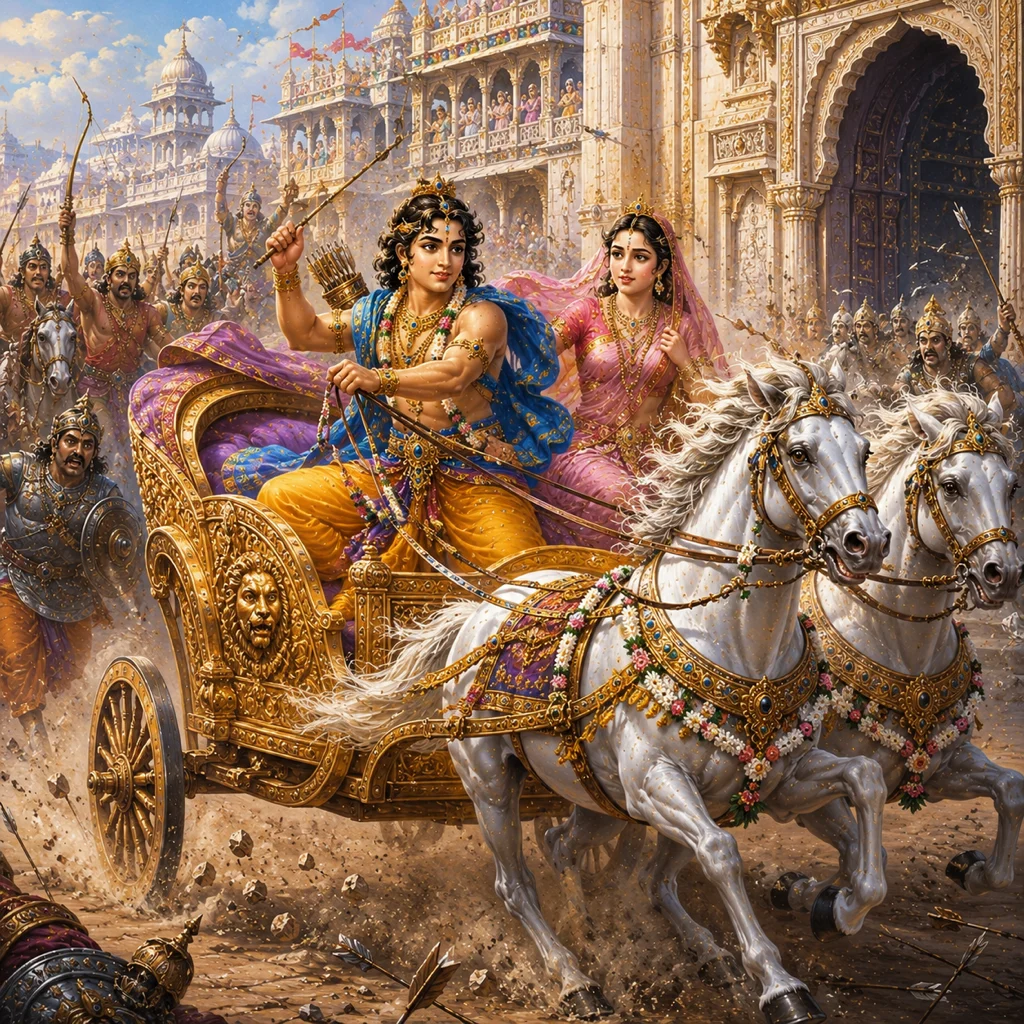
Śrīmad-Bhāgavatam, Canto 10, Chapter 68 — Samba, the son of Jambavati and Lord Krishna, carries away Lakshmana, the daughter of Duryodhana. The Kuru heroes pursue him, and though he fights alone with great valor, they overpower and capture him.
Saṅkṣepa (short meaning)
This lila reveals the boldness of kshatriya spirit, the force of destiny, and the tension between royal pride and rightful relationship. Samba does not act timidly. Moved by heroic resolve, he carries away Lakshmana in the traditional warrior manner. The Kuru elders, however, cannot tolerate the act and pursue him in anger. Though Samba stands alone against many powerful warriors, his courage shines brightly. The lila shows both the intensity of royal dharma and the deeper current of destiny working through events that appear turbulent on the surface.
Śāstra-pramāṇa (key points from the text)
Samba carries away Lakshmana
(Śrīmad-Bhāgavatam, Canto 10, Chapter 68)
The Kuru heroes pursue him
(Śrīmad-Bhāgavatam, Canto 10, Chapter 68)
Samba fights alone
(Śrīmad-Bhāgavatam, Canto 10, Chapter 68)
Many warriors overpower him
(Śrīmad-Bhāgavatam, Canto 10, Chapter 68)
The conflict leads to Balarama’s intervention
(Śrīmad-Bhāgavatam, Canto 10, Chapter 68)
Tattva (essential teaching) — with śāstra
Kshatriya life includes decisive action
Heroism is not only victory
Destiny moves through turbulent events
Dharma remains central
Sevā today (practice for this day)
How to use this darśanam page
View the image, read the narration and śāstra-pramāṇa, contemplate the tattva, and complete the practice through seva. Follow the sequence: darśana → śravaṇa → manana → seva.