Pramāṇa (Śāstra reference)
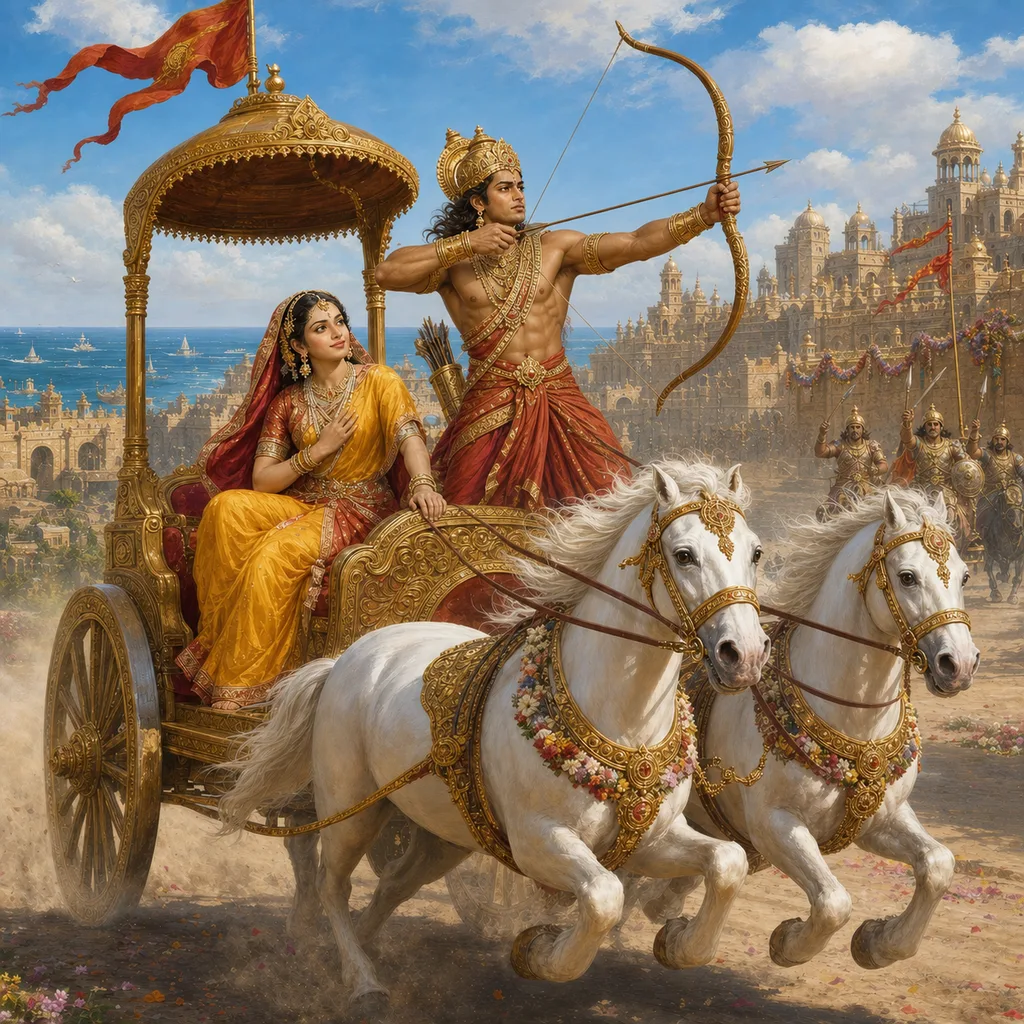
Śrīmad-Bhāgavatam 10.86.2–12 narrates how Arjuna, while on pilgrimage, learned that Lord Balarama intended to give Subhadrā to Duryodhana, although others in the family did not approve. Desiring to marry her, Arjuna entered Dvārakā disguised as a tridaṇḍi renunciant and remained there during the rainy season. When they met, verse 7 explicitly states that Subhadrā also desired Arjuna as her husband, smiling bashfully and fixing her heart and eyes upon him. Later she left the palace for a chariot festival. With her parents’ sanction and Krishna’s approval, Arjuna took her onto his chariot. Verse 10 describes him standing on the chariot with his bow and driving away the warriors and guards who tried to block his path. After Krishna and the family pacified Balarama, he joyfully sent the couple wedding gifts.
Saṅkṣepa (short meaning)
The word haraṇa can sound like a story of force when removed from its scriptural context, but the Bhagavatam first makes Subhadrā’s own desire unmistakable. The outward conflict concerns family arrangement and kṣatriya custom, not the absence of her consent. Arjuna acts decisively, Krishna supports their union, and Balarama’s anger is transformed into blessing and generous acceptance.
Śāstra-pramāṇa (key points from the text)
Arjuna hears of the proposed marriage
(Śrīmad-Bhāgavatam 10.86.2–12)
He enters Dvārakā in disguise
(Śrīmad-Bhāgavatam 10.86.2–12)
Subhadrā chooses Arjuna in her heart
(Śrīmad-Bhāgavatam 10.86.2–12)
The festival creates the opportunity
(Śrīmad-Bhāgavatam 10.86.2–12)
Arjuna protects their departure
(Śrīmad-Bhāgavatam 10.86.2–12)
Balarama finally blesses the union
(Śrīmad-Bhāgavatam 10.86.2–12)
Tattva (essential teaching) — with śāstra
Scriptural context guards the meaning
Krishna protects His devotees’ bond
Determination serves a righteous purpose
Conflict can become blessing
Sevā today (practice for this day)
How to use this darśanam page
View the image, read the narration and śāstra-pramāṇa, contemplate the tattva, and complete the practice through seva. Follow the sequence: darśana → śravaṇa → manana → seva.