JAPA TIME

Śāstra‑mārga Darśanam — daily lila contemplation

LIVE DARSHAN & DAILY PRACTICE

A śāstra‑mārga darśanam page: image + śāstra pramāṇa + practice.

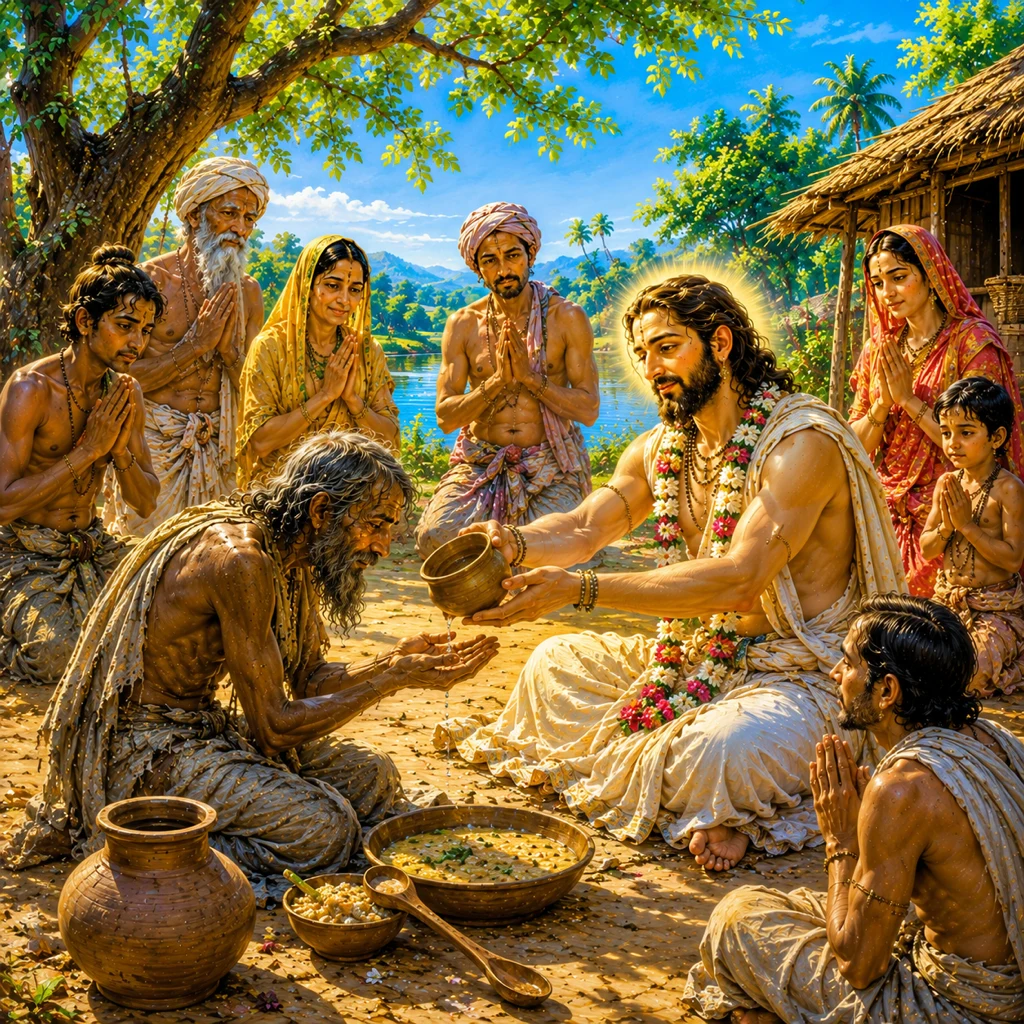
The story of Rantideva — the king gives away even his last water out of compassion

The story of Rantideva — the king gives away even his last water out of compassion
Śāstra-mārga Śrīmad-Bhāgavatam 9.21
The story of Rantideva — the king gives away even his last water out of compassion

Pramāṇa (Śāstra reference)

Śrīmad-Bhāgavatam, Canto 9, Chapter 21 — after fasting for many days, King Rantideva receives a small amount of food and water, yet he gives everything away to successive guests, including the final portion of water to a suffering outcaste.

Saṅkṣepa (short meaning)

This lila reveals the highest compassion born of God consciousness. Rantideva does not see others as separate from himself, nor does he cling to his own survival. Though weakened by hunger and thirst, he gives away everything he has, not for prestige, not for piety, and not for liberation, but simply to relieve the suffering of others. His heart is fixed on the Lord, and therefore his compassion becomes universal. This lila teaches that pure devotion naturally flowers as selfless mercy toward all beings.

Śāstra-pramāṇa (key points from the text)

Rantideva endures fasting
King Rantideva and his family endure prolonged fasting.
(Śrīmad-Bhāgavatam, Canto 9, Chapter 21)
Food and water arrive
At last, a small amount of food and water becomes available.
(Śrīmad-Bhāgavatam, Canto 9, Chapter 21)
Guests come one after another
One guest arrives, then another, and Rantideva gives away the food each time.
(Śrīmad-Bhāgavatam, Canto 9, Chapter 21)
Only water remains
Finally, when only water remains, a suffering outcaste asks for drink.
(Śrīmad-Bhāgavatam, Canto 9, Chapter 21)
Rantideva gives the last water
Rantideva gives away even that last water with full compassion.
(Śrīmad-Bhāgavatam, Canto 9, Chapter 21)
He desires only the relief of suffering
He declares that he does not desire material enjoyment, heavenly life, mystic powers, or even liberation, but only the relief of others’ suffering.
(Śrīmad-Bhāgavatam, Canto 9, Chapter 21)
The visitors are revealed
The visitors are then revealed to be divine beings who had come to test him.
(Śrīmad-Bhāgavatam, Canto 9, Chapter 21)

Tattva (essential teaching) — with śāstra

Devotion frees the heart
Pure devotion frees the heart from selfishness.
Compassion flows from realization
Compassion toward all beings is a natural expression of realization of the Lord.
Rantideva seeks others’ welfare
Rantideva does not seek personal liberation; he seeks only the good of others.
The Lord sees the surrendered heart
The Lord is pleased not merely by ritual charity, but by a heart fully surrendered in mercy and equality.

Sevā today (practice for this day)

1. Pray to become compassionate
Chant one attentive round praying, “O Lord, please remove selfishness from my heart and let me become an instrument of compassion.”
2. Give without expecting return
Offer something today to someone in need without expecting recognition or return.
3. Examine the center of your practice
Reflect on whether your spirituality is centered on your own comfort, or on service to the Lord present in all beings.
Pure devotion naturally flowers as selfless mercy toward all beings.

How to use this darśanam page

View the image, read the narration and śāstra-pramāṇa, contemplate the tattva, and complete the practice through seva. Follow the sequence: darśana → śravaṇa → manana → seva.