Pramāṇa (Śāstra reference)
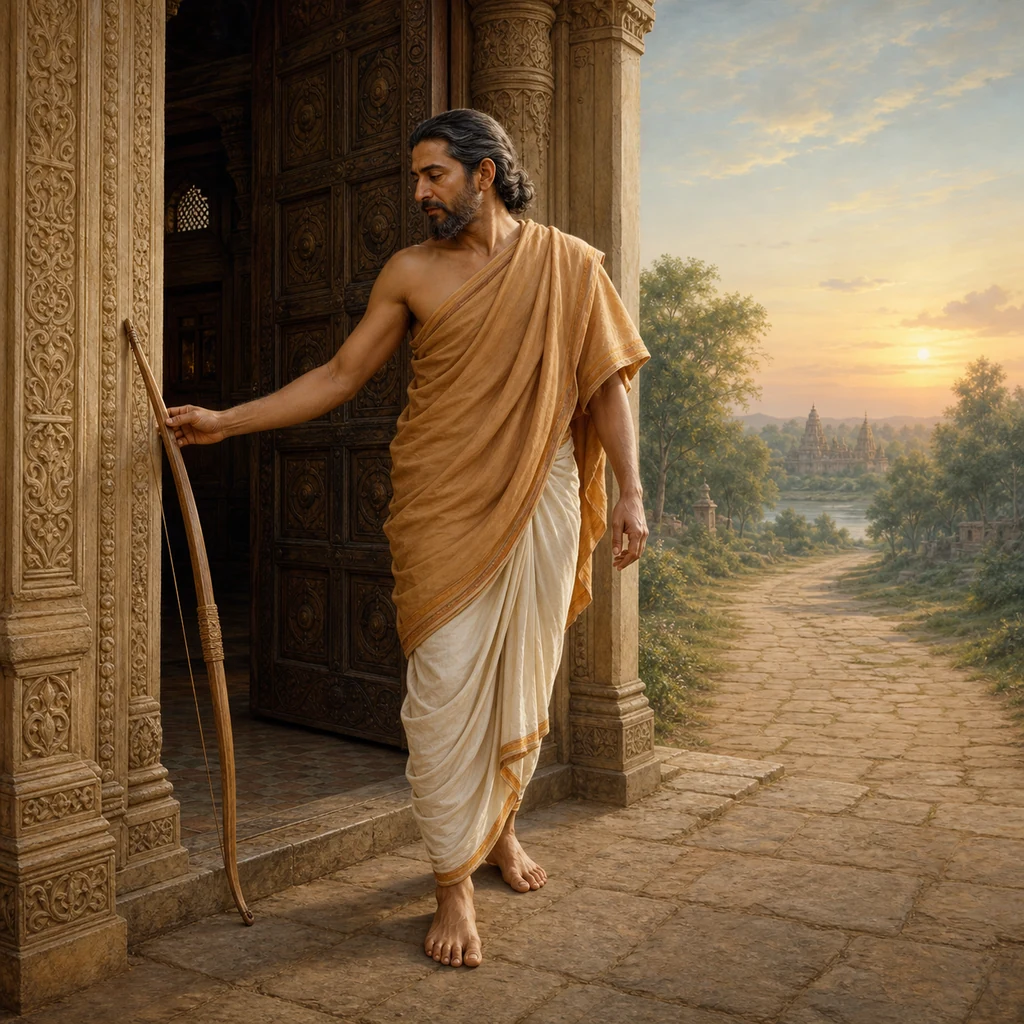
Śrīmad-Bhāgavatam 3.1.10–13 recounts how Vidura gives Dhṛtarāṣṭra direct and beneficial counsel: he should return the Pāṇḍavas’ rightful share and stop supporting Duryodhana’s envy of Lord Kṛṣṇa. Duryodhana becomes enraged and insults Vidura in the company of Karṇa, his younger brothers and Śakuni (3.1.14). He attacks Vidura’s birth, accuses him of serving the enemy and demands that he be driven from the palace with nothing but his life (3.1.15). Though these words strike him deeply, Vidura understands the working of the Lord’s external energy. He places his bow at the doorway of his brother’s palace and leaves without sorrow or resentment (3.1.16). After departing from Hastināpura, he travels to holy places connected with the lotus feet of the Lord (3.1.17). The illustration depicts only the exact action of verse 3.1.16: Vidura leaves his bow at the door and steps away from the palace.
Saṅkṣepa (short meaning)
Vidura speaks for dharma even when his counsel is rejected. Pierced by Duryodhana’s cruel words, he neither retaliates nor clings to royal comfort. He leaves his bow at the palace door and turns the imposed exile into a journey toward the Lord’s holy places.
Śāstra-pramāṇa (key points from the text)
Vidura gives truthful counsel
(Śrīmad-Bhāgavatam 3.1.14–17)
Duryodhana answers with insult
(Śrīmad-Bhāgavatam 3.1.14–17)
Vidura does not retaliate
(Śrīmad-Bhāgavatam 3.1.14–17)
The bow remains at the doorway
(Śrīmad-Bhāgavatam 3.1.14–17)
Exile becomes pilgrimage
(Śrīmad-Bhāgavatam 3.1.14–17)
Tattva (essential teaching) — with śāstra
Truth is not measured by acceptance
A devotee does not nourish resentment
Renunciation means freedom from false shelter
Difficulty can open the path of remembrance
Sevā today (practice for this day)
How to use this darśanam page
View the image, read the narration and śāstra-pramāṇa, contemplate the tattva, and complete the practice through seva. Follow the sequence: darśana → śravaṇa → manana → seva.