Pramāṇa (Śāstra reference)
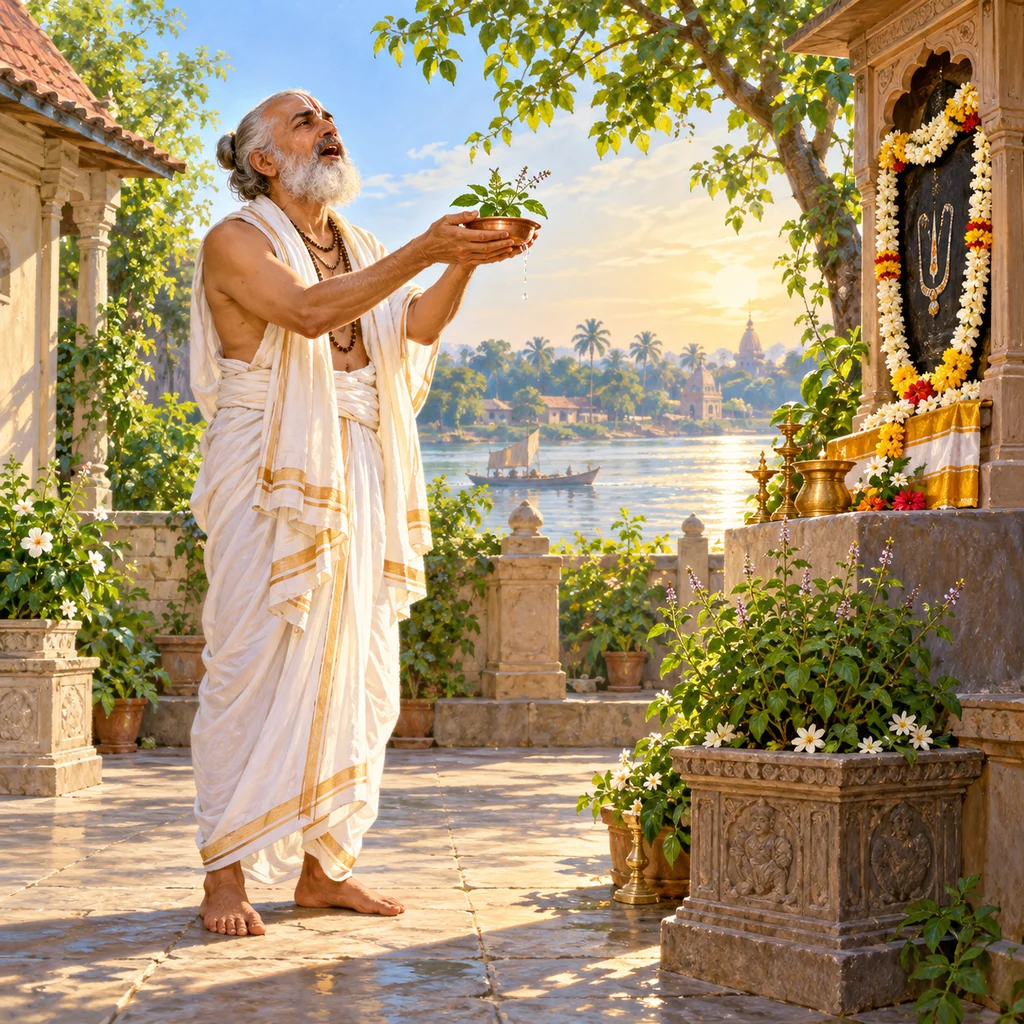
In Cc. Ādi 3.96–100, Advaita Ācārya sees that people have forgotten devotional service and feels compassion for them. In 3.101–102 He resolves to worship Kṛṣṇa with a pure mind and ask Him to begin the saṅkīrtana movement. Verses 3.104–108 explain the offering of tulasī and water; 3.108 specifically describes Ganges water and tulasī buds offered while contemplating Kṛṣṇa's lotus feet. In 3.109–110 the Ācārya loudly calls to the Lord, and His appeal is called the principal reason for Śrī Caitanya's descent. The artwork shows the prayer and offering before that descent. Age, clothing, buildings, altar, morning light and river view are artistic details, not literal descriptions in these verses.
Saṅkṣepa (short meaning)
Seeing people absorbed in worldly affairs and unfamiliar with devotional service, Advaita Ācārya felt compassion. He resolved to worship Kṛṣṇa and ask Him to come so that the Lord Himself could spread bhakti and the chanting of the Holy Name. Offering Ganges water with tulasī buds while remembering Kṛṣṇa's lotus feet, the Ācārya called out loudly. Caitanya-caritāmṛta connects Śrī Caitanya's descent with this devotee's appeal.
Śāstra-pramāṇa (key points from the text)
Compassion for others
(Śrī Caitanya-caritāmṛta, Ādi 3.96)
A prayer for descent
(Śrī Caitanya-caritāmṛta, Ādi 3.101)
A simple offering
(Śrī Caitanya-caritāmṛta, Ādi 3.104)
Ganges water and tulasī
(Śrī Caitanya-caritāmṛta, Ādi 3.108)
The loud appeal
(Śrī Caitanya-caritāmṛta, Ādi 3.109)
Tattva (essential teaching) — with śāstra
The Lord responds to a devotee
Bhakti gives an offering its meaning
The Holy Name in Kali-yuga
The moment depicted
Sevā today (practice for this day)
How to use this darśanam page
View the image, read the narration and śāstra-pramāṇa, contemplate the tattva, and complete the practice through seva. Follow the sequence: darśana → śravaṇa → manana → seva.