Pramāṇa (Śāstra reference)
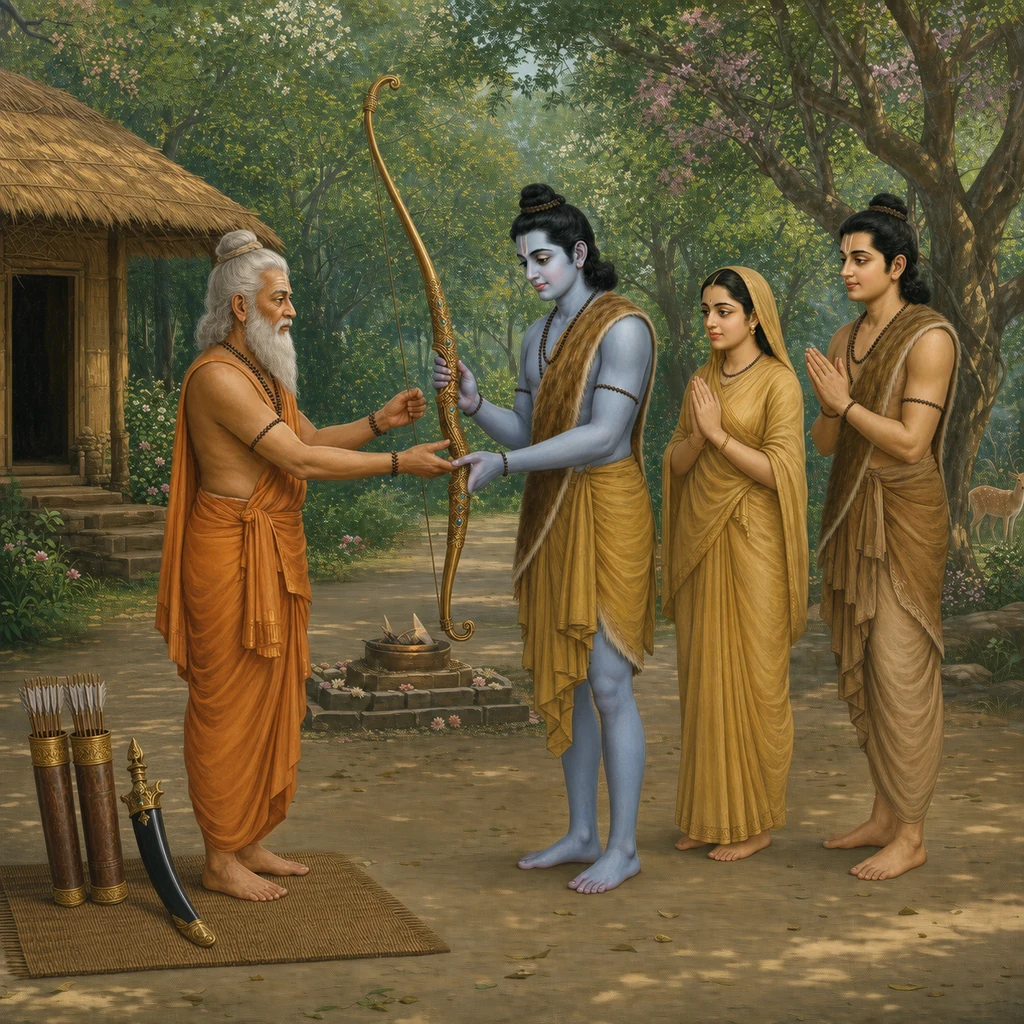
In Vālmīki Rāmāyaṇa 3.12, Agastya Muni learns that Rāma has arrived with Lakṣmaṇa and Sītā. The sage says that he has long yearned for Rāma’s arrival and orders that all three be welcomed (3.12.9–12). Rāma enters the hermitage, where docile deer roam (3.12.16), sees the radiant sage and reverentially touches his feet (3.12.21–25). Agastya receives his guests with a seat, water and food according to the duties of a forest hermit (3.12.26–31). He then shows Rāma a great divine bow belonging to Viṣṇu, made by Viśvakarmā and adorned with gold and diamonds (3.12.32). He also presents an unfailing arrow from Brahmā, two inexhaustible quivers filled with sharp arrows and a gold-adorned sword given by Indra (3.12.33–34). Agastya recalls that Viṣṇu once used this bow to defeat mighty demons and restore prosperity to the celestials (3.12.35). He asks Rāma to accept the bow, quivers, arrow and sword for victory, and gives all these excellent weapons to Him (3.12.36–37). The illustration depicts the exact act of presenting the bow in verses 3.12.32–37.
Saṅkṣepa (short meaning)
Agastya Muni had long wished to see Lord Rāma. After welcoming Rāma, Sītā and Lakṣmaṇa according to the sacred duty of hospitality, he entrusts Rāma with Viṣṇu’s divine bow and the weapons meant for His mission in the forest.
Śāstra-pramāṇa (key points from the text)
Agastya yearns to see Rāma
(Vālmīki Rāmāyaṇa 3.12.24–37)
Rāma bows at the sage’s feet
(Vālmīki Rāmāyaṇa 3.12.24–37)
The guests are properly received
(Vālmīki Rāmāyaṇa 3.12.24–37)
Viṣṇu’s bow is revealed
(Vālmīki Rāmāyaṇa 3.12.24–37)
The weapons are entrusted to Rāma
(Vālmīki Rāmāyaṇa 3.12.24–37)
Tattva (essential teaching) — with śāstra
The Lord honours His devotee
Hospitality is sacred service
A gift is perfected by service
The Lord’s mission is supported by devotees
Sevā today (practice for this day)
How to use this darśanam page
View the image, read the narration and śāstra-pramāṇa, contemplate the tattva, and complete the practice through seva. Follow the sequence: darśana → śravaṇa → manana → seva.