Pramāṇa (Śāstra reference)
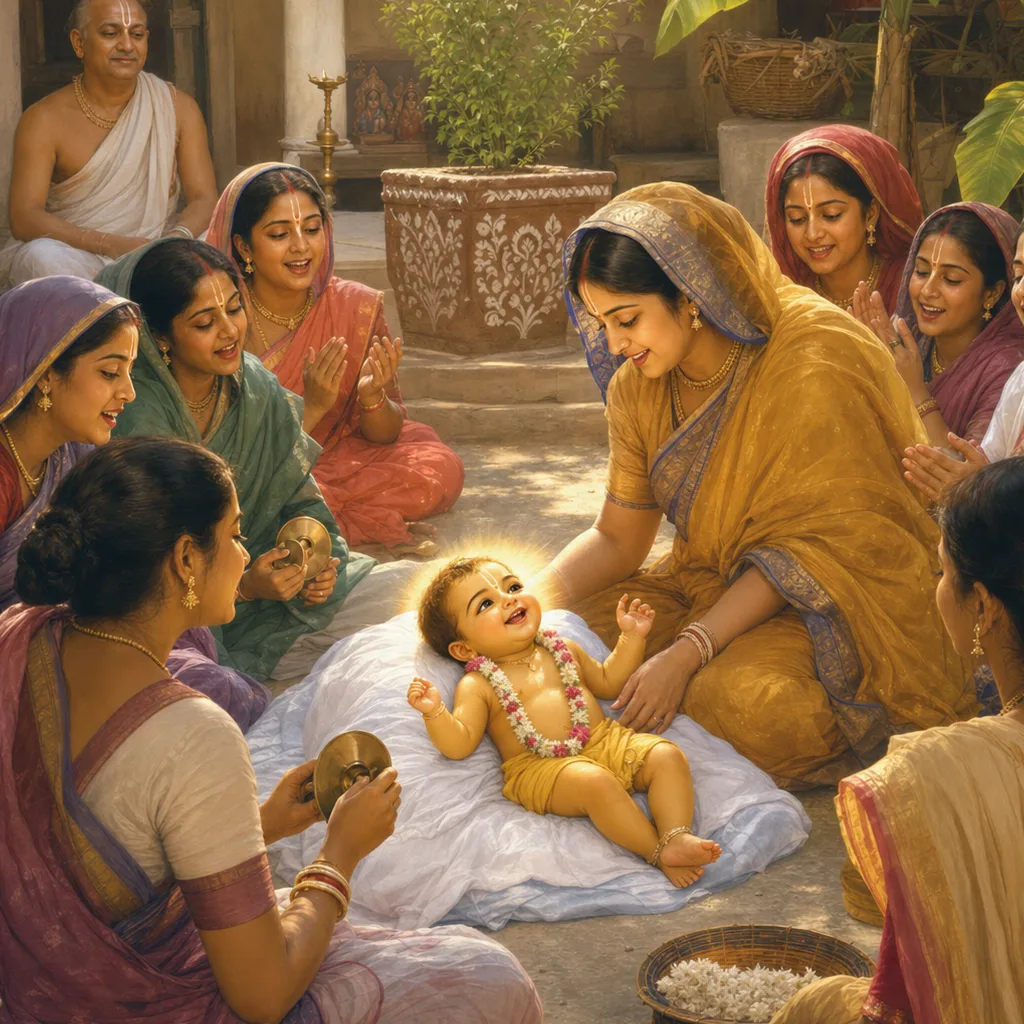
Chaitanya-caritamrita, Adi-lila, Chapter 14, together with Chaitanya-bhagavata, describes the childhood pastimes of Sri Nimai in Navadvipa. In the home of Jagannatha Mishra and Saci Mata, the golden child reveals sweet divine play. When He cries, the women chant the names of Hari, and Nimai becomes peaceful and joyful, showing that His real desire is to hear the Holy Name and to make everyone chant.
Saṅkṣepa (short meaning)
This lila reveals the hidden mission of Sri Caitanya Mahaprabhu even in His infancy. Outwardly He appears as the beloved child of Saci Mata and Jagannatha Mishra, surrounded by affectionate family members and neighbors in Navadvipa. Yet His crying becomes a divine arrangement: the women begin to chant the names of Hari, and the Lord smiles. The simple courtyard of a devotional home becomes the first field of nama-sankirtana. The lila teaches that the Holy Name is not merely a practice added later in life; it is the heart of Mahaprabhu’s mercy from the very beginning.
Śāstra-pramāṇa (key points from the text)
Nimai appears in Navadvipa
(Śrī Caitanya-caritāmṛta, Ādi-līlā, Chapter 14; Śrī Caitanya-bhāgavata, Ādi-khaṇḍa)
The Lord hides His majesty
(Śrī Caitanya-caritāmṛta, Ādi-līlā, Chapter 14; Śrī Caitanya-bhāgavata, Ādi-khaṇḍa)
The child cries
(Śrī Caitanya-caritāmṛta, Ādi-līlā, Chapter 14; Śrī Caitanya-bhāgavata, Ādi-khaṇḍa)
Hari-nama is chanted
(Śrī Caitanya-caritāmṛta, Ādi-līlā, Chapter 14; Śrī Caitanya-bhāgavata, Ādi-khaṇḍa)
The Lord smiles
(Śrī Caitanya-caritāmṛta, Ādi-līlā, Chapter 14; Śrī Caitanya-bhāgavata, Ādi-khaṇḍa)
Sankirtana begins at home
(Śrī Caitanya-caritāmṛta, Ādi-līlā, Chapter 14; Śrī Caitanya-bhāgavata, Ādi-khaṇḍa)
The future mission is revealed
(Śrī Caitanya-caritāmṛta, Ādi-līlā, Chapter 14; Śrī Caitanya-bhāgavata, Ādi-khaṇḍa)
Tattva (essential teaching) — with śāstra
The Lord is drawn by His Name
Bhakti begins at home
Mercy appears through simplicity
The mission is already present
Sevā today (practice for this day)
How to use this darśanam page
View the image, read the narration and śāstra-pramāṇa, contemplate the tattva, and complete the practice through seva. Follow the sequence: darśana → śravaṇa → manana → seva.