Pramāṇa (Śāstra reference)
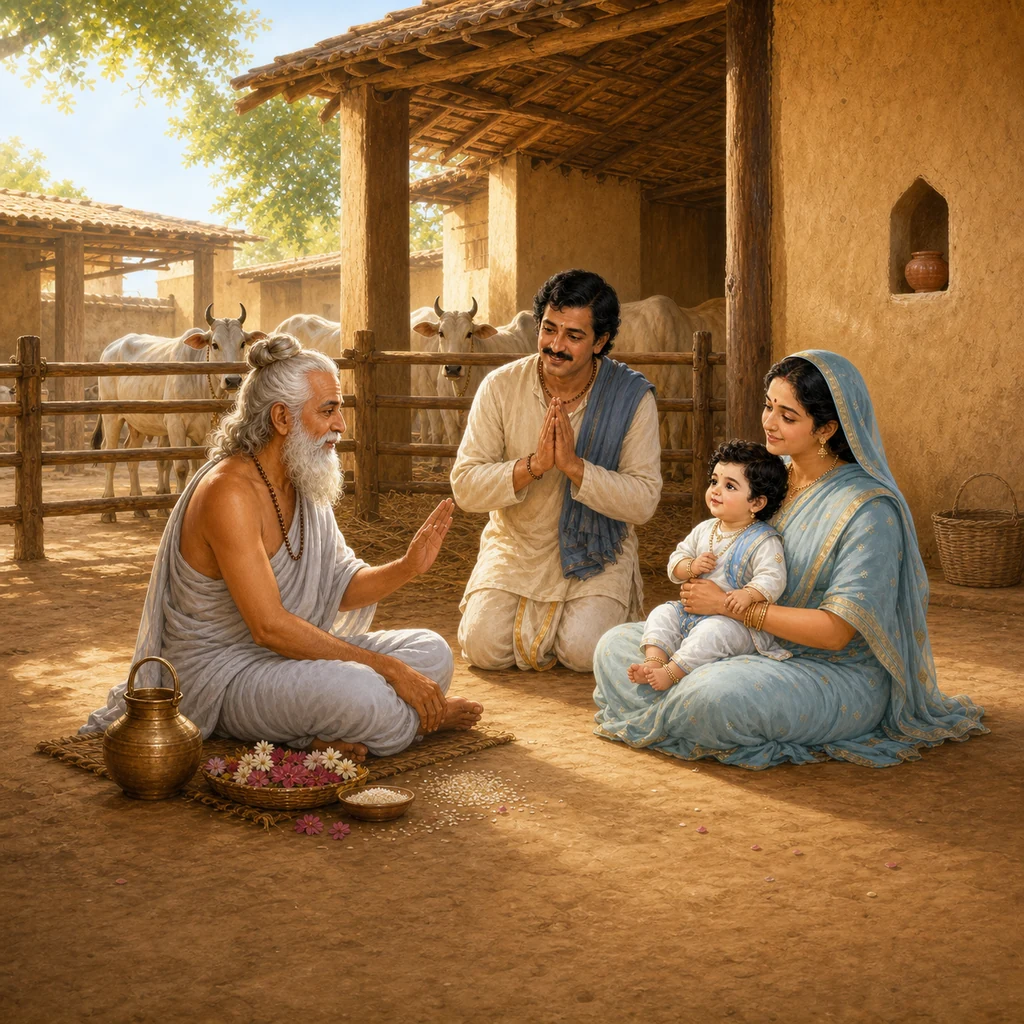
Śrīmad-Bhāgavatam 10.2.4–5 states that Ananta, the seventh child, entered the womb of Devakī. The Supreme Lord then instructed Yogamāyā to go to Vraja, where Rohiṇī was living in the house of Nanda Mahārāja, and to transfer this child, known as Śeṣa, from Devakī to Rohiṇī (10.2.6–8). The Lord foretold that because of this transfer He would be known as Saṅkarṣaṇa, because He delights the world as Rāma, and because of His extraordinary strength as Balabhadra (10.2.13). Yogamāyā accepted the order and carried it out (10.2.14–15). Later Nanda asked Garga Muni to perform the children’s rites secretly in Vraja (10.8.10). Garga Muni conducted the secluded naming ceremony (10.8.11) and said of Rohiṇī’s son: because He delights His friends He will be called Rāma, because of His exceptional strength He is known as Bala, and because He unites the Yadus He is also called Saṅkarṣaṇa (10.8.12). The illustration depicts this exact moment of verse 10.8.12.
Saṅkṣepa (short meaning)
On Lord Balarāma’s Appearance Day we remember the Lord’s arrangement by which Anantadeva came under Rohiṇī’s care in Gokula. At the private naming ceremony, Garga Muni reveals three names: Rāma, who delights His devotees; Bala, the possessor of extraordinary strength; and Saṅkarṣaṇa, who draws together the Yadus.
Śāstra-pramāṇa (key points from the text)
Anantadeva enters Devakī’s womb
(Śrīmad-Bhāgavatam 10.2.4–15; 10.8.10–12)
Yogamāyā receives the Lord’s order
(Śrīmad-Bhāgavatam 10.2.4–15; 10.8.10–12)
The three names are foretold
(Śrīmad-Bhāgavatam 10.2.4–15; 10.8.10–12)
Nanda requests a private ceremony
(Śrīmad-Bhāgavatam 10.2.4–15; 10.8.10–12)
Garga Muni names Rohiṇī’s son
(Śrīmad-Bhāgavatam 10.2.4–15; 10.8.10–12)
Tattva (essential teaching) — with śāstra
Balarāma is Anantadeva
Spiritual strength is His gift
He delights the devotees
He brings the Lord’s family together
Sevā today (practice for this day)
How to use this darśanam page
View the image, read the narration and śāstra-pramāṇa, contemplate the tattva, and complete the practice through seva. Follow the sequence: darśana → śravaṇa → manana → seva.