Pramāṇa (Śāstra reference)
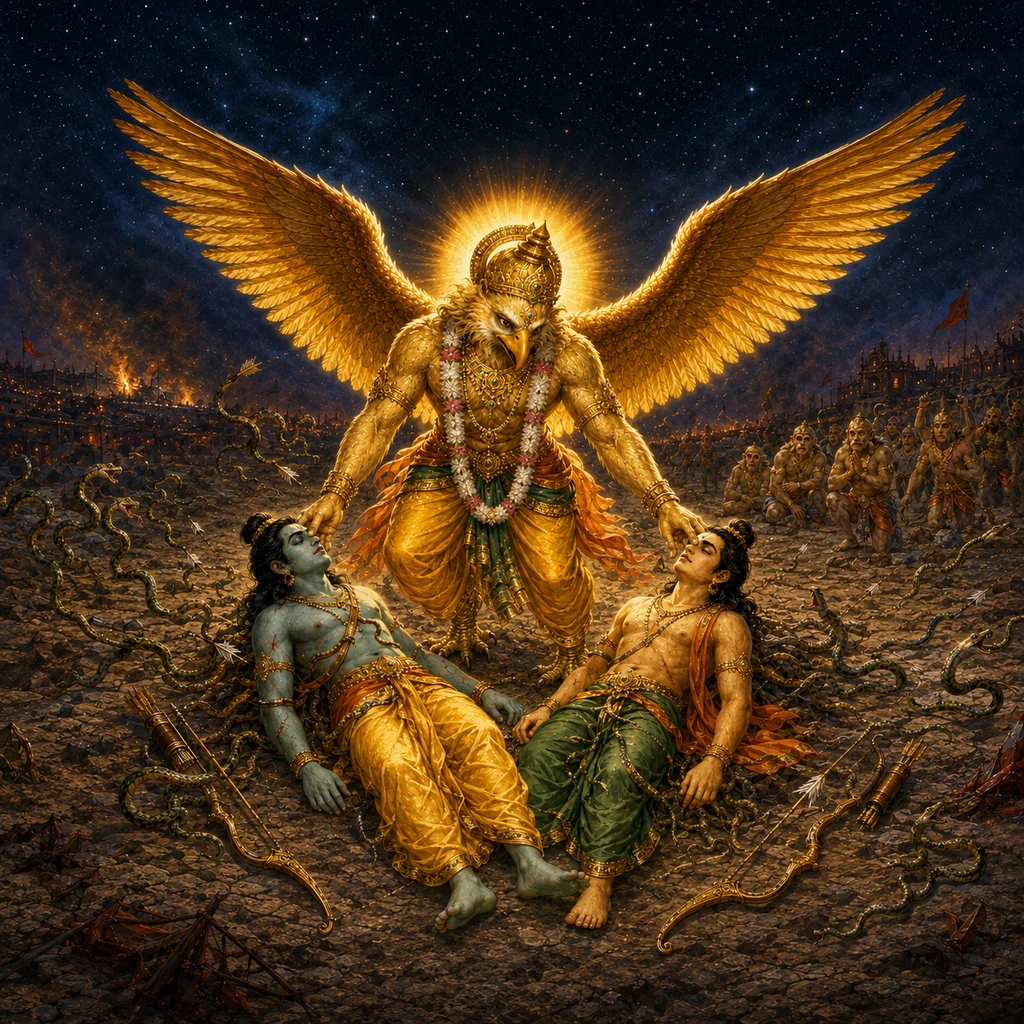
In Vālmīki Rāmāyaṇa 6.44.35–39, Indrajit disappears from sight and, using illusion, strikes Rāma and Lakṣmaṇa throughout their bodies with terrible arrows in serpent form. He binds the two brothers in an entanglement of arrows because he cannot overcome them while manifest. In 6.50.33–36, a great wind and the force of mighty wings announce Garuda, the son of Vinatā, whom all the vānaras behold shining like a blazing fire. At the sight of Garuda, the serpents that had become arrows and bound Rāma and Lakṣmaṇa flee (6.50.37). Garuda greets the brothers and touches their moonlike faces with his hands (6.50.38). Their wounds heal, their bodies become whole, and their splendour, strength, resolve, intelligence and memory are redoubled (6.50.39–40). Garuda then raises and embraces them (6.50.41). The illustration shows this precise moment of release and healing: one Garuda touches both brothers while the serpent-arrows withdraw; Indrajit is not shown because he attacked while invisible and is absent from the rescue scene.
Saṅkṣepa (short meaning)
Hidden by sorcery, Indrajit binds Rāma and Lakṣmaṇa with arrows transformed into poisonous serpents. Garuda arrives radiant like fire. The serpent-arrows flee from their natural master, and by Garuda’s touch the brothers’ wounds close and their strength returns.
Śāstra-pramāṇa (key points from the text)
Indrajit fights while invisible
(Vālmīki Rāmāyaṇa 6.44.36–39; 6.50.36–41)
Serpent-arrows bind both brothers
(Vālmīki Rāmāyaṇa 6.44.36–39; 6.50.36–41)
Garuda appears like blazing fire
(Vālmīki Rāmāyaṇa 6.44.36–39; 6.50.36–41)
The serpents flee
(Vālmīki Rāmāyaṇa 6.44.36–39; 6.50.36–41)
Garuda’s touch restores them
(Vālmīki Rāmāyaṇa 6.44.36–39; 6.50.36–41)
Tattva (essential teaching) — with śāstra
The Lord’s service attracts providential help
Deception does not overcome dharma
Devotional friendship expresses itself through action
Divine grace restores the whole person
Sevā today (practice for this day)
How to use this darśanam page
View the image, read the narration and śāstra-pramāṇa, contemplate the tattva, and complete the practice through seva. Follow the sequence: darśana → śravaṇa → manana → seva.