Pramāṇa (Śāstra reference)
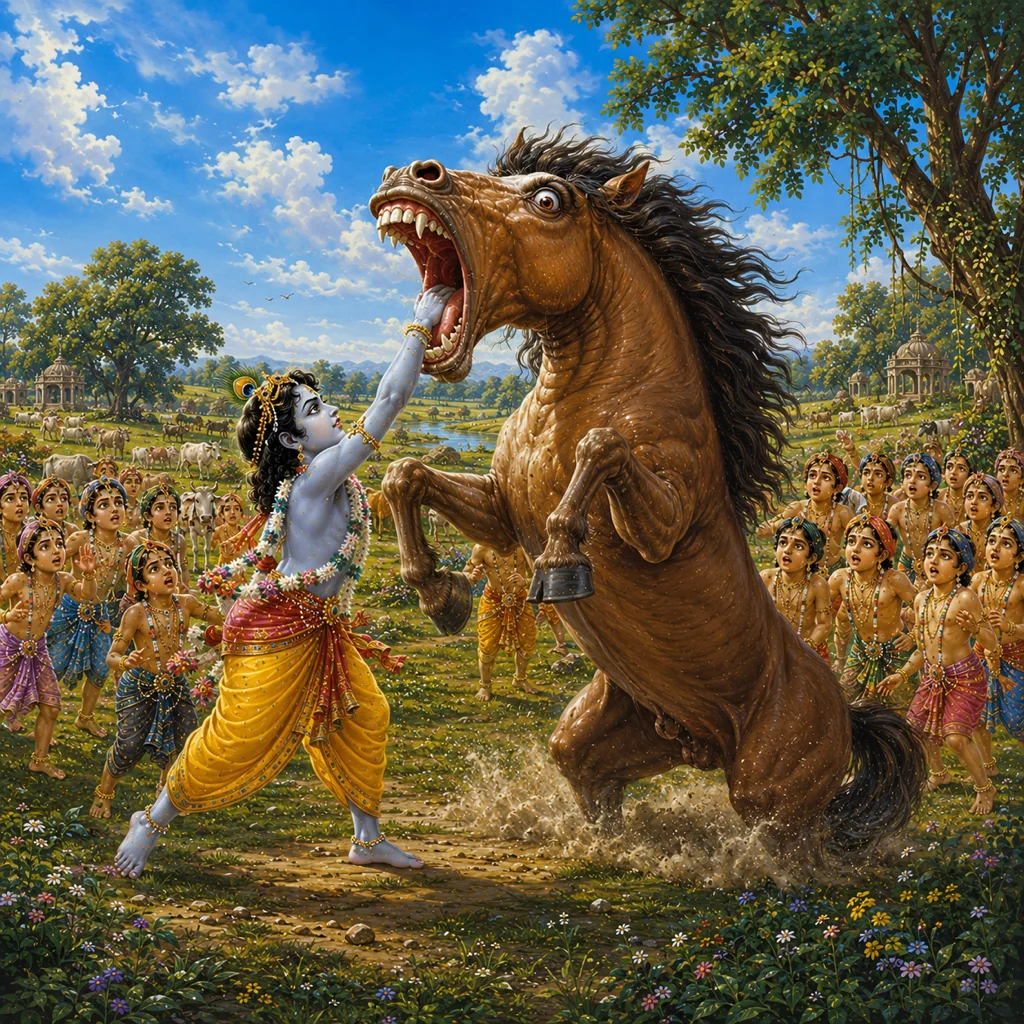
Śrīmad-Bhāgavatam, Canto 10, Chapter 37 — the horse-demon Kesi, sent by Kamsa, enters Vraja in a terrifying form. Lord Krishna confronts him and kills him by thrusting His arm into the demon’s mouth, causing the demon’s body to choke and burst.
Saṅkṣepa (short meaning)
This lila reveals the fearless protective power of Sri Krishna in Vraja. Kesi comes violently, roaring and terrifying the residents of Vraja, but Krishna remains completely calm and effortless. The demon represents arrogance, force, and uncontrolled fury, yet before the Lord he becomes helpless. By placing His arm into Kesi’s mouth, Krishna destroys the asura from within and restores peace to Vraja. The lila teaches that the Lord not only protects His devotees from external danger, but also crushes the proud and restless demonic tendencies that threaten the heart.
Śāstra-pramāṇa (key points from the text)
Kesi enters Vraja
(Śrīmad-Bhāgavatam, Canto 10, Chapter 37)
Vraja is terrified
(Śrīmad-Bhāgavatam, Canto 10, Chapter 37)
Krishna approaches without fear
(Śrīmad-Bhāgavatam, Canto 10, Chapter 37)
Kesi attacks with his hooves
(Śrīmad-Bhāgavatam, Canto 10, Chapter 37)
Krishna places His arm in Kesi’s mouth
(Śrīmad-Bhāgavatam, Canto 10, Chapter 37)
Kesi is destroyed
(Śrīmad-Bhāgavatam, Canto 10, Chapter 37)
The devas glorify Krishna
(Śrīmad-Bhāgavatam, Canto 10, Chapter 37)
Tattva (essential teaching) — with śāstra
Krishna’s strength is effortless
The Lord protects Vraja
Kesi represents violent pride
Bhagavan makes fear insignificant
Sevā today (practice for this day)
How to use this darśanam page
View the image, read the narration and śāstra-pramāṇa, contemplate the tattva, and complete the practice through seva. Follow the sequence: darśana → śravaṇa → manana → seva.