Pramāṇa (Śāstra reference)
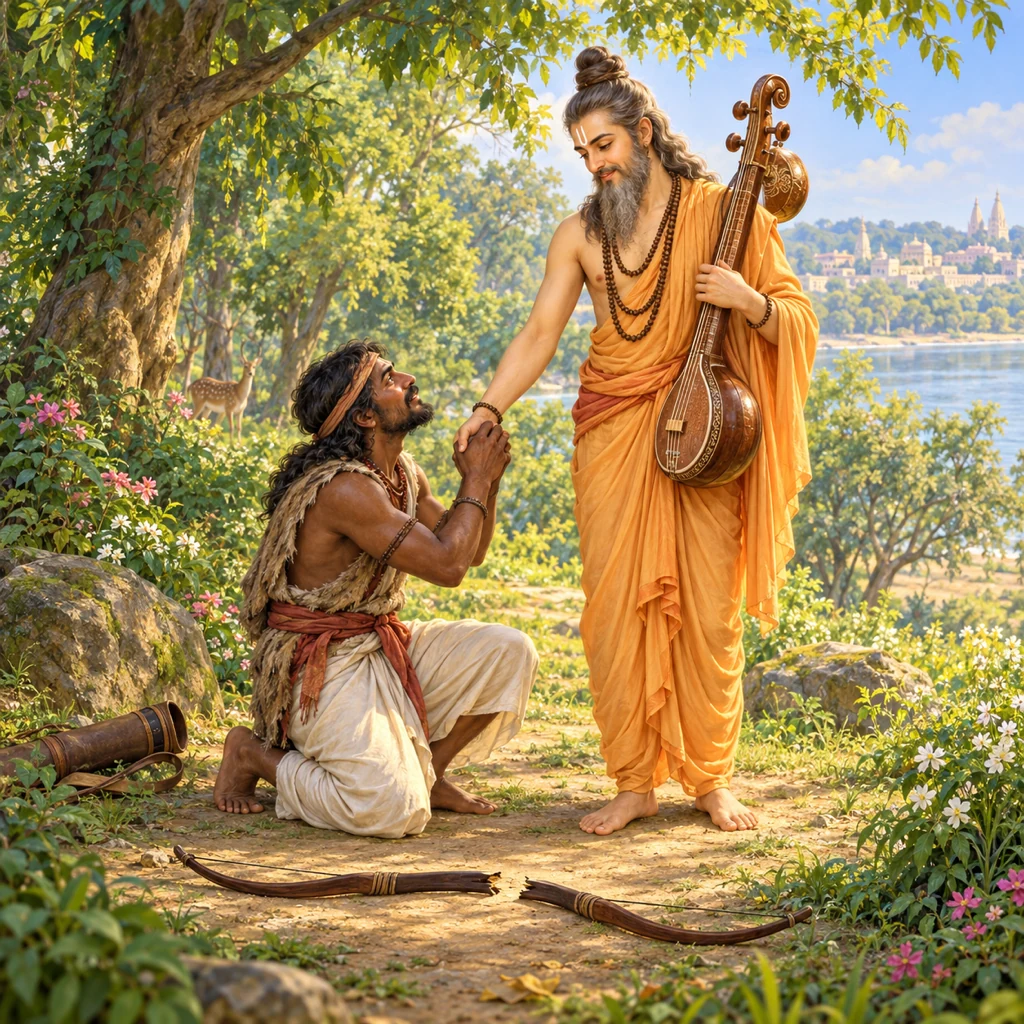
In Cc. Madhya 24.229–282 Lord Caitanya tells Sanātana Gosvāmī of Nārada Muni's meeting with the hunter Mṛgāri. Nārada sees injured animals and explains the consequences of deliberately causing pain. Mṛgāri asks for guidance, breaks his bow, bows at the sage's feet, and Nārada raises him (24.254–258). Nārada then instructs him to live by a river, serve tulasī, and chant the mahā-mantra (24.260–262). Later the former hunter carefully moves ants from his path rather than harming them (24.270–272).
Saṅkṣepa (short meaning)
Nārada Muni meets Mṛgāri in the forest and draws his attention to the suffering of animals. Hearing the sage, the hunter repents and asks how to change his life. At Nārada's instruction he breaks his bow and bows at his feet. The sage raises him and guides him toward serving tulasī and chanting the Holy Name. Later Mṛgāri is careful not to injure even ants.
Śāstra-pramāṇa (key points from the text)
Nārada sees suffering
(Śrī Caitanya-caritāmṛta, Madhya 24.231)
Meeting Mṛgāri
(Śrī Caitanya-caritāmṛta, Madhya 24.249)
A change of life
(Śrī Caitanya-caritāmṛta, Madhya 24.258)
The practice of bhakti
(Śrī Caitanya-caritāmṛta, Madhya 24.261)
The fruit of mercy
(Śrī Caitanya-caritāmṛta, Madhya 24.270)
Tattva (essential teaching) — with śāstra
Saintly association transforms
Compassion becomes action
Bhakti removes envy
The Holy Name opens a new life
Sevā today (practice for this day)
How to use this darśanam page
View the image, read the narration and śāstra-pramāṇa, contemplate the tattva, and complete the practice through seva. Follow the sequence: darśana → śravaṇa → manana → seva.