Saṅkṣepa (short meaning)
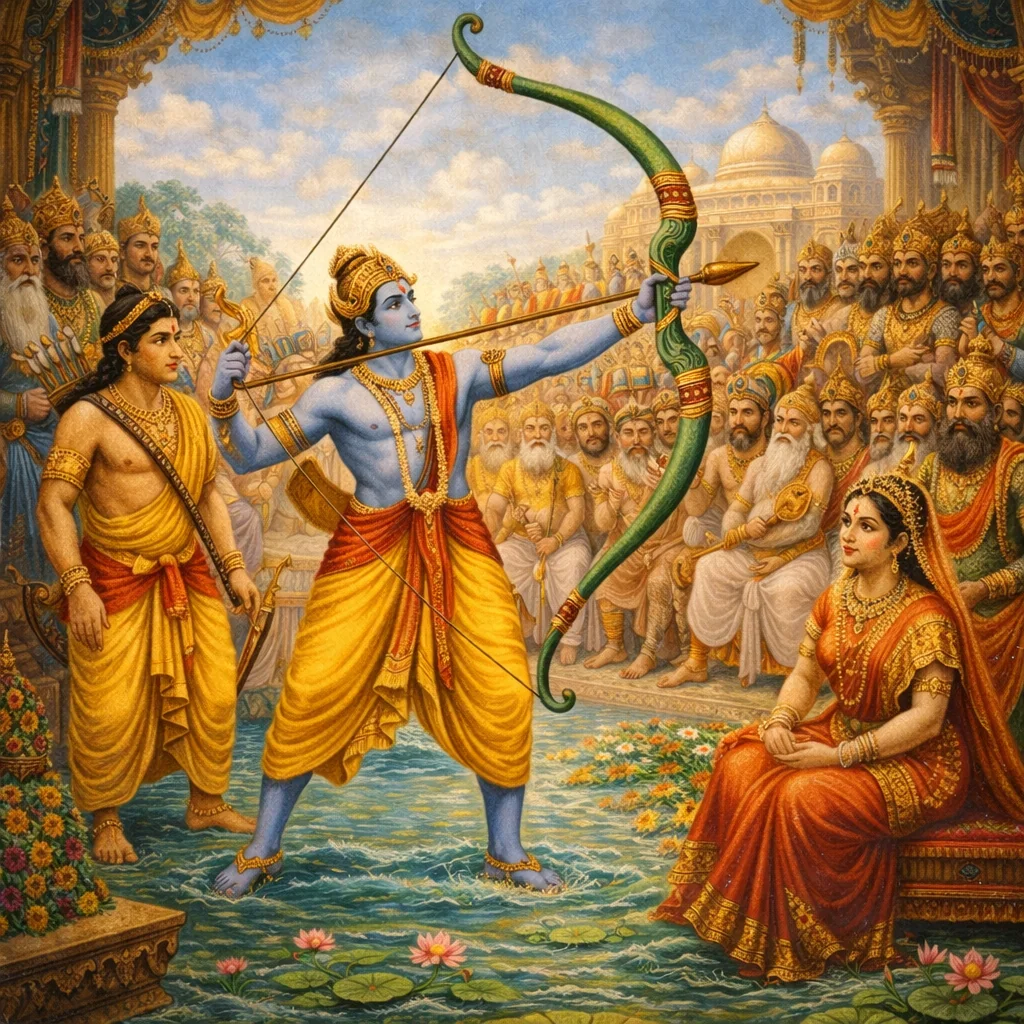
In Mithilā, King Janaka announces Sītā’s svayaṁvara: the one who can lift and string Lord Śiva’s mighty bow will be worthy to receive Sītā’s hand. Many kings and princes, proud of their strength, fail even to move it. Then Śrī Rāma, steady and composed, lifts the bow and strings it; and by divine arrangement the bow breaks with a thunderous sound. Recognizing this as the fulfillment of his vow and a sign of Rāma’s divine qualification, Janaka offers Sītā to Rāma with sacred rites. This līlā reveals that true power is governed by dharma, humility, and the Lord’s sanction—not by ego.
Many powerful rulers fail to lift or string the bow. Rāma lifts and strings the bow; it breaks with a great sound; Janaka offers Sītā to Rāma.
Śāstra‑pramāṇa (proof from śāstra)
Vālmīki Rāmāyaṇa, Bāla‑kāṇḍa 66 — Janaka’s vow
tasminnāyamatiḥ kṣiptā sītā dāsyāmi sā tv iti” Translation: “This excellent bow of Śiva is dear to me. I will give Sītā to the one who can string this bow.”
Bāla‑kāṇḍa 66 — Many kings fail
naiva śekur dhārayituṃ dhanuḥ paramadaṃṣṭriṇam” Meaning: All those great kings and warriors, though valiant in battle, could not even lift that supremely powerful bow.
Bāla‑kāṇḍa 67 — Rāma strings and breaks the bow
ādāya tu mahābāhuḥ sajyaṃ cakre mahābalaḥ” Translation: Then Rāma, delighted, approached that excellent bow. The mighty‑armed one took it and strung it with great strength.
Bāla‑kāṇḍa 67 — Janaka offers Sītā
sītāṃ pradātuṃ samare kṛtārthaḥ samapadyata” Meaning: King Janaka, of great splendor, seeing the glorious Rāma, considered himself successful and prepared to give Sītā in marriage.
Tattva (essential teaching) — with śāstra
Dharma empowers true strength: when power is aligned with righteousness, it becomes effective and auspicious. (Bāla‑kāṇḍa 66–67)
The Lord’s heroism is self‑controlled: Rāma acts without pride, revealing divine steadiness. (Bāla‑kāṇḍa 67)
Sacred marriage is service: Sītā–Rāma’s union is a divine arrangement within dharma, not worldly display. (Bāla‑kāṇḍa 66–67)
Humility crowns greatness: those driven by ego fail; the Lord’s servant succeeds effortlessly by higher will. (Bāla‑kāṇḍa 66–67; cf. BG 4.11)
Sevā today (practice for this day)
mama vartmānuvartante manuṣyāḥ pārtha sarvaśaḥ”
As all surrender unto Me, I reward them accordingly. Everyone follows My path in all respects, O son of Pṛthā.
How to use this darśanam page
This page provides a complete śāstra‑mārga contemplation on the Sītā‑svayaṁvara / Śiva‑dhanuḥ‑līlā. Use it for daily meditation: View the image → read the narration → study the śāstra pramāṇa → contemplate the tattva → perform the seva. The structure is fixed to maintain śāstric integrity while allowing deep personal reflection.