Saṅkṣepa (short meaning)
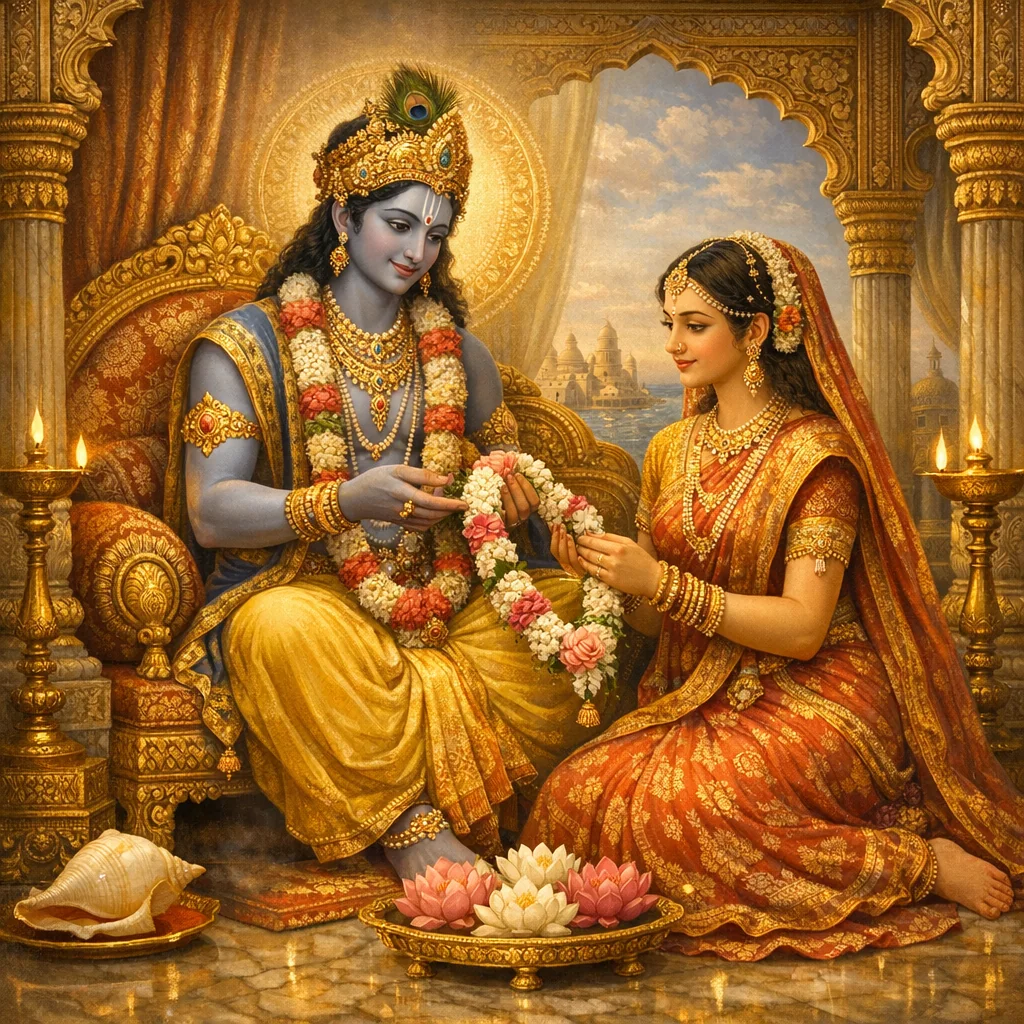
In divine Dvārakā, Śrī Kṛṣṇa sits in His royal palace with Queen Rukmiṇī, surrounded by auspicious beauty—lamps, ornaments, flowers, and garlands. Their meeting is not worldly romance, but śuddha‑bhakti expressed as loving, devoted service: Rukmiṇī offers herself in complete surrender, and Kṛṣṇa responds with perfect affection and protection. This līlā teaches that the Supreme Lord is conquered not by force, but by love offered in humility.
kathāsu puṇyāsu śṛṇoti gāyati
tathā tathā kāma‑vivarjitaṁ manaḥ
śanair viraktyā bhava‑saṅgam unmuje"
As one increasingly hears and chants the pious narrations of Lord Hari, the mind gradually becomes free from lust and detached from material association.
Śāstra‑pramāṇa (scriptural proof)
ŚB 10.52‑10.54 — Rukmiṇī's surrender and marriage
mahānubhāvo bhava‑saṅga‑mocanaḥ
tvām eva māṁ kṣatra‑bhidaṁ vṛṇe 'naghaṁ
na yāvad anyaṁ bhagavan vṛṇe kvacit" ŚB 10.52.13 — "O almighty Lord, You are the cause of all causes, yet You are free from material entanglement. O destroyer of the kṣatriyas, I choose You as my husband, and no one else."
ŚB 10.60 — Kṛṣṇa‑Rukmiṇī palace dialogue
vibho 'vyaktaṁ vyaktam āpannaṁ īśa
tvam eva sākṣāt puruṣaḥ purāṇaḥ
māyāṁ vicitrāṁ śrayase yayedaṁ
sṛṣṭaṁ sthityaṁ neṣyate 'ntaḥ‑pradhānaḥ" ŚB 10.60.45 — Queen Rukmiṇī said: "O all‑powerful Lord, You are the original Supreme Person. You appear in this manifest world though You are unmanifest. By Your multifarious energies You create, maintain and destroy this cosmic manifestation."
BG 4.11 — Reciprocation according to devotion
tāṁs tathaiva bhajāmy aham
mama vartmānuvartante
manuṣyāḥ pārtha sarvaśaḥ" Translation: As all surrender unto Me, I reward them accordingly. Everyone follows My path in all respects, O son of Pṛthā.
BG 9.26 — Love is the essence of offering
yo me bhaktyā prayacchati
tad ahaṁ bhakty‑upahṛtam
aśnāmi prayatātmanaḥ" Translation: If one offers Me with love and devotion a leaf, a flower, fruit or water, I will accept it.
Tattva (essential teaching)
Bhakti is personal: Kṛṣṇa reciprocates with the devotee's surrender (BG 4.11).
The heart of devotion is loving offering: not the object, but the bhāva (devotional mood) (BG 9.26).
Rukmiṇī embodies pure śaraṇāgati: humility and dependence draw the Lord's mercy (SB 10.52‑10.54).
Household life becomes transcendental when centered on Kṛṣṇa: when actions are offered to Him, life turns into yajña (devotional offering) (BG 3.9).
Dvārakā‑līlā reveals Kṛṣṇa's bhakta‑vātsalya: His affectionate care for the surrendered devotee (SB 10.60).
Sevā today (practice for this day)
tad ahaṁ bhakty‑upahṛtam aśnāmi prayatātmanaḥ"
If one offers Me with love and devotion a leaf, a flower, fruit or water, I will accept it.
How to use this darśanam page
This page provides a complete śāstra‑mārga contemplation on the Dvārakā‑dhāma‑līlā. Use it for daily meditation: View the image → read the narration → study the śāstra pramāṇa → contemplate the tattva → perform the seva. The structure is fixed to maintain śāstric integrity while allowing deep personal reflection.