Pramāṇa (Śāstra reference)
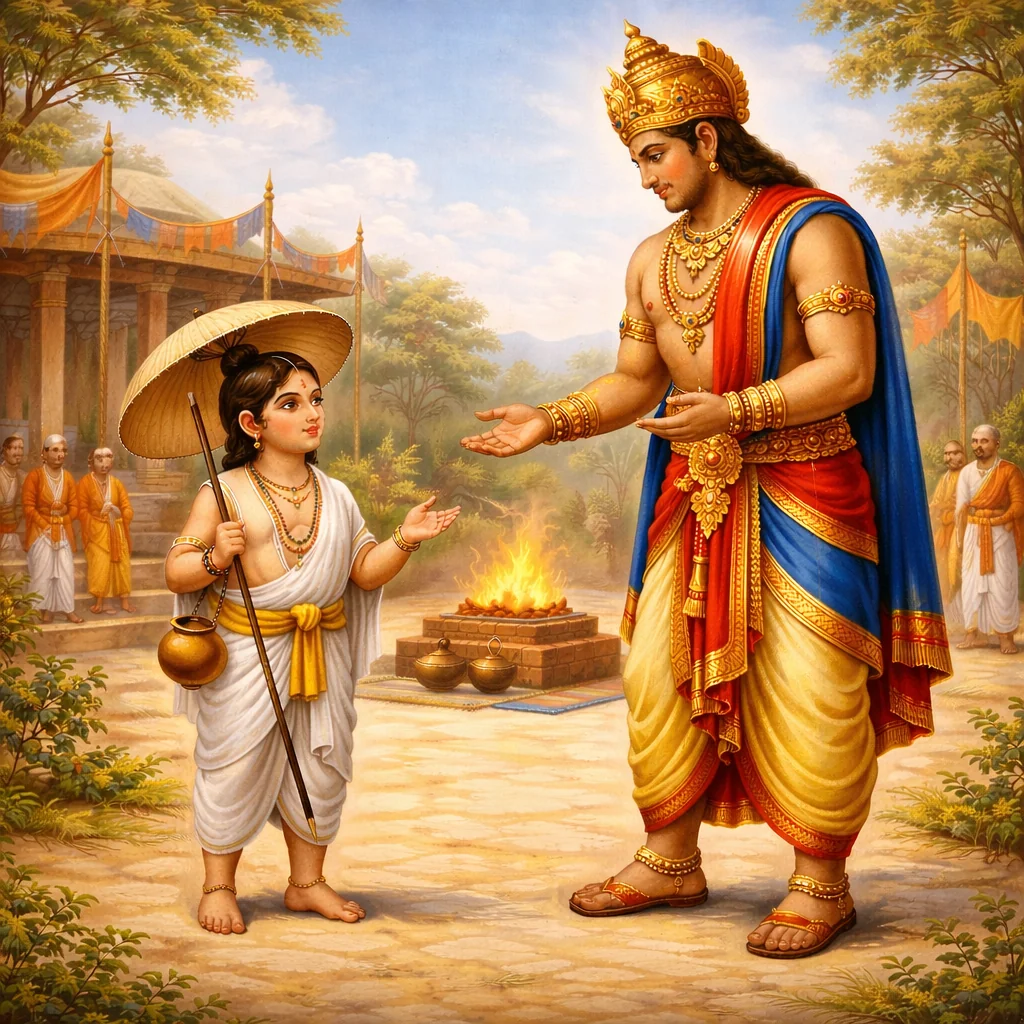
Srimad-Bhagavatam, Canto 8 — Lord Vamanadeva appears in the sacrificial arena of Bali Maharaja in the form of a young brahmana dwarf and asks only for three steps of land. Bali Maharaja, famous for generosity, receives Him with honor and prepares to grant His request.
Saṅkṣepa (short meaning)
This lila reveals the hidden majesty of the Supreme Lord. Vamanadeva does not come as a conqueror, but as a humble brahmana beggar. By asking for only three steps of land, He tests Bali Maharaja’s heart and brings him to the threshold of full surrender. The scene teaches that the Lord may appear in simplicity, yet within that simplicity lies His complete divine purpose. Bali’s greatness is not merely in giving wealth, but in being willing to give everything to the Lord.
The Lord’s request is also His mercy: by asking, He gives the soul a chance to surrender willingly.
Śāstra‑pramāṇa (key points from the text)
Lord Vamanadeva appears in the arena of sacrifice
Bali Maharaja receives Him respectfully
Vamanadeva asks only for three steps of land
Bali Maharaja’s readiness to fulfill the request
Tattva (essential teaching) — with śāstra
The Supreme Lord does not always reveal Himself through outward power; sometimes He comes in humility to reveal the truth of a devotee’s heart. (SB 8.18.12)
True charity reaches perfection when it is offered to the Lord. What seems small outwardly may become absolute when connected to Him. (SB 8.19.37)
Bali Maharaja’s glory lies not only in generosity, but in his readiness to honor dharma, brahmanas, and the will of the Lord. (SB 8.20.4)
The Lord’s request is also His mercy: by asking, He gives the soul a chance to surrender willingly. (SB 8.22.28)
Sevā today (practice for this day)
By asking for three steps of land, Vamanadeva expands to cover the entire universe. The soul who gives everything to Kṛṣṇa gains everything in return.
How to use this darśanam page
This page provides a complete śāstra‑mārga contemplation on the Vāmana‑līlā. Use it for daily meditation: View the image → read the narration → study the śāstra pramāṇa → contemplate the tattva → perform the seva. The structure is fixed to maintain śāstric integrity while allowing deep personal reflection.